Why Do Fainting Goats Faint and How Does the Condition Work
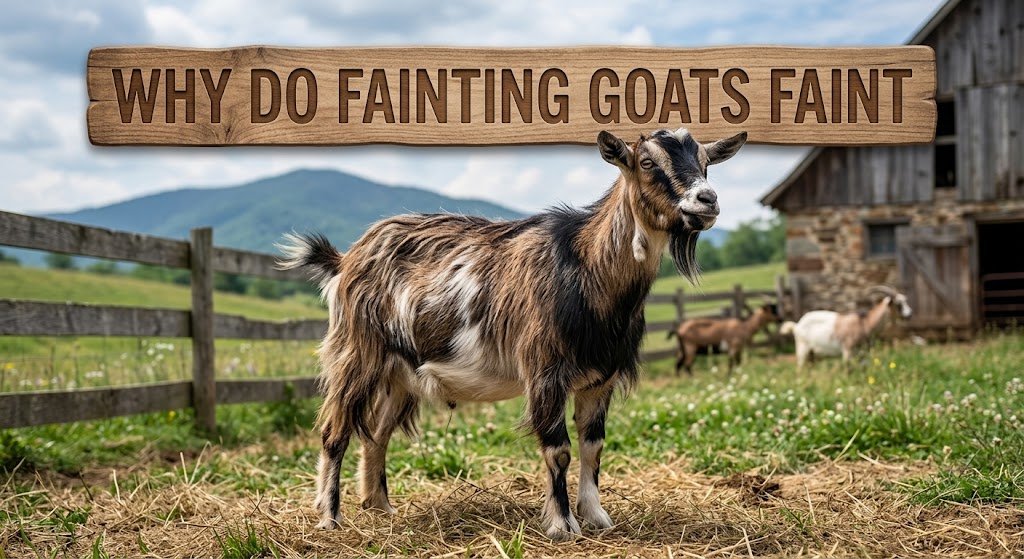
Fainting goats are always fun to introduce to first-time visitors at our farm, especially because what people think is happening isn’t actually happening at all. People ask us “do fainting goats faint in real?” Despite the name, fainting goats don’t truly faint. They remain awake and aware the entire time. What you’re seeing is a temporary muscle reaction that can make their legs suddenly stiffen and, in some cases, cause them to tip over.
Here’s what causes that unusual reaction, what can trigger it, whether it hurts, and a few things worth knowing if you’re thinking about raising fainting goats yourself.
The Real Cause Isn’t Fainting at All
The reaction comes from an inherited condition called myotonia congenita. It affects the way the goat’s skeletal muscles relax after contracting. Normally, a muscle contracts and then relaxes almost immediately. In a fainting goat, a genetic change affecting chloride channels in the muscle makes that relaxation take longer than it should.
So when the goat suddenly tenses its muscles, its legs can become stiff for several seconds. If the stiffness is strong enough, the goat may lose its balance and fall over. It can certainly look dramatic, but the goat hasn’t lost consciousness. It knows exactly what’s happening around it and gets back to normal once the muscles relax.
What Actually Triggers an Episode
Anything that causes a goat to tense its muscles suddenly can bring on the characteristic stiffness. A loud noise might do it. So can an unexpected touch, sudden excitement, or something moving quickly nearby. Even running toward food can sometimes cause a reaction in a particularly responsive goat.
Signs generally begin when the goats are young and continue throughout their lives. The condition isn’t progressive, so it doesn’t simply keep getting worse as the animal gets older.
Not every fainting goat reacts with the same intensity, either. Some barely stiffen, while others may lock up much more noticeably and fall over when startled. Breeders sometimes describe this difference using a stiffness scale, which helps explain why one fainting goat may seem much more reactive than another.
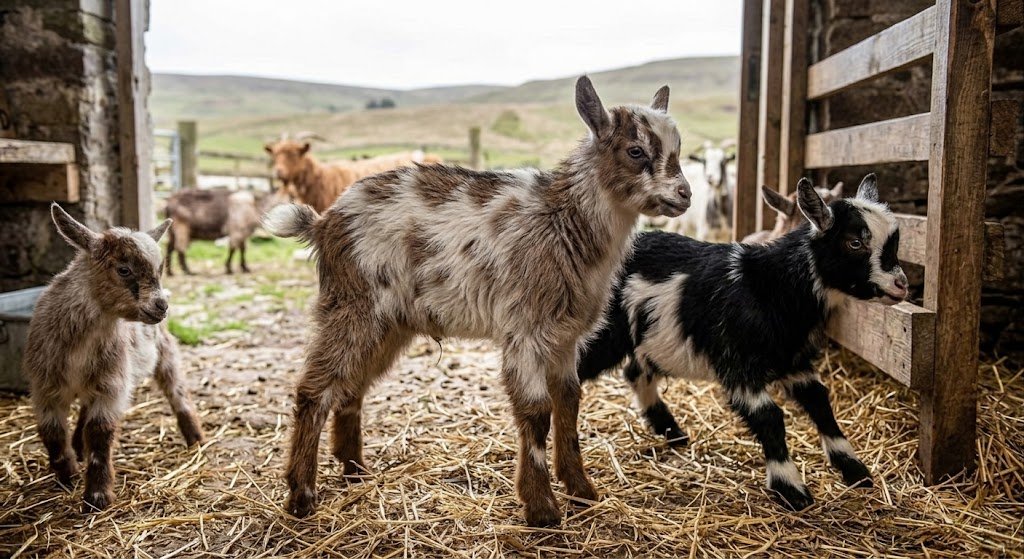
Does It Actually Hurt Them while Fainting Goats Faint?
This is one of the harder questions to answer with complete certainty. A fainting goat usually gets back up and carries on normally once the stiffness passes. However, that doesn’t necessarily tell us exactly what the animal experiences during those few seconds.
People with similar forms of myotonia can experience stiffness and, in some cases, muscle discomfort or cramping. We can’t simply assume goats experience the condition in exactly the same way.
There is also the practical risk of injury if a goat becomes stiff and falls in an unsafe place. Good management matters, particularly around hard surfaces, steep areas, or anything the animal could strike during a fall.
For that reason, intentionally frightening a fainting goat just to make it fall isn’t a good idea. The reaction may be what made the breed famous, but it shouldn’t be treated as a trick.
Where the Breed Came From
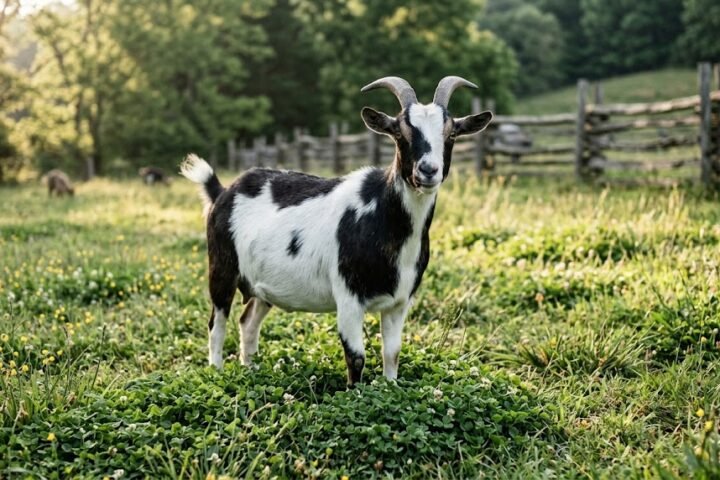
Fainting goats have an interesting American history. The breed is commonly associated with Tennessee, where goats showing this unusual muscle condition appeared during the 1800s. That history is why you’ll often hear them called Tennessee Fainting Goats.
They’ve picked up plenty of other names over the years as well, including stiff-legged goats, wooden-leg goats, and nervous goats. Beyond their unusual muscle condition, they have traditionally been valued as meat goats.
Their manageable size, muscular build, and ability to do well in practical farm settings helped them find a place on small farms and homesteads. Today, plenty of people also keep them simply because they enjoy the breed’s appearance, temperament, and unusual history.
A Practical Upside Most People Don’t Expect
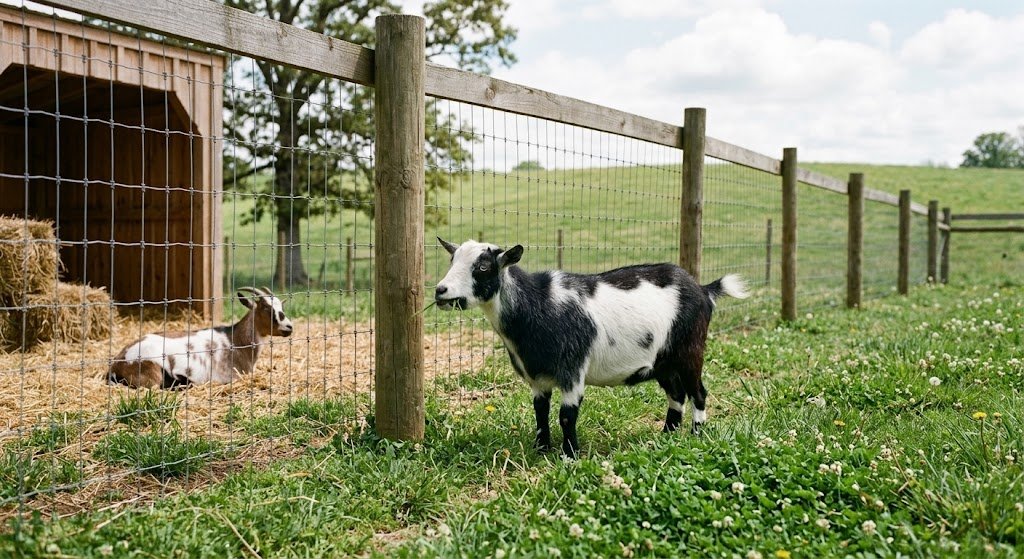
Anyone who has raised goats knows how surprisingly talented some breeds can be at getting over, under, or through a fence. Fainting goats tend to be somewhat easier to contain.
They generally aren’t as athletic when it comes to jumping and climbing as some other goat breeds. That doesn’t mean you can forget about proper fencing, but they may be less determined to turn every fence into an obstacle course. For a small farm or homestead, that can be a welcome characteristic.
You still need secure goat fencing, of course. The fainting goats faint but have a remarkable ability to find weaknesses you didn’t know your fence had.
Frequently Asked Questions
Do fainting goats actually lose consciousness?
No. Despite their name, fainting goats remain conscious during an episode. Their muscles temporarily become stiff, which can cause them to lose their balance and fall over.
What causes the stiffening episode?
It is caused by an inherited condition called myotonia congenita. The condition affects how quickly the goat’s skeletal muscles relax after contracting.
At what age does it start?
Signs usually become noticeable when the goats are young. Once present, the condition remains throughout their lives rather than progressively becoming more severe.
Does the condition hurt them?
We can’t say with certainty exactly what a goat feels during an episode. Similar conditions in humans can involve stiffness and sometimes discomfort, so it’s best not to intentionally trigger the reaction.
Are fainting goats good escape artists?
Generally, they aren’t known for being as athletic at jumping and climbing as some other goat breeds. Proper fencing is still essential, but many owners find them relatively manageable to contain.
Conclusion
Fainting goats don’t really faint at all. Their famous reaction comes from myotonia congenita, an inherited muscle condition that temporarily prevents their muscles from relaxing normally. That explains the stiff legs, awkward movements, and occasional tumble while also explaining why the goat remains awake and aware throughout the entire episode.
It’s certainly the characteristic that made fainting goats famous, but there’s much more to the breed than falling over. Their manageable size, distinctive history, and practical qualities have earned them a lasting place on farms and homesteads.
If you’re considering fainting goats for your own property, we work directly with verified breeders and can help you find a healthy animal suited to your setup. Reach out to us, and we’ll walk you through your options.