Can You Milk a Mini Highland Cow for Household Dairy Use
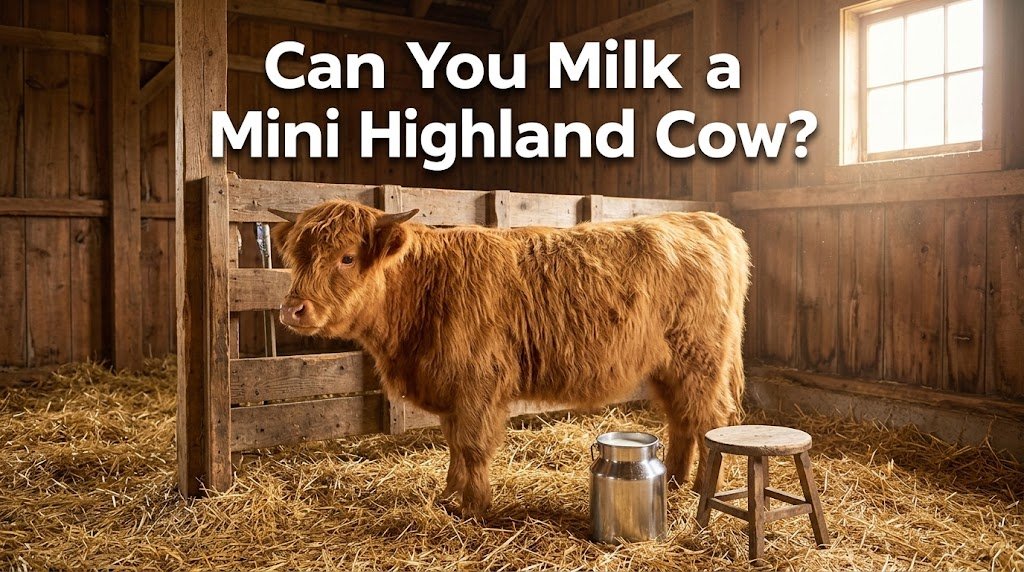
We get this question all the time from people who love the look of Highland cattle but are also hoping for a cow that can provide some milk for the household. The answer is yes. You can absolutely milk a Mini Highland cow. But before you start picturing a refrigerator full of fresh milk every day, it helps to understand what these cattle can realistically produce.
Highlands were never developed as dairy cattle, so their milk production looks quite different from what you would expect from a Jersey or another dairy breed. For the right homestead, though, the amount they produce can be more than enough.
Here is what you should know about milk quantity, milk quality, calf sharing, and the practical side of milking a Mini Highland.
Why Highland Cattle Were Never Built for Milk Volume
Highland cattle have always needed to produce enough milk to raise a healthy calf. What they were never bred to do was produce large amounts of extra milk for people.
The breed developed in the harsh conditions of Scotland, where cattle needed to handle cold, wet weather, survive on rough forage, raise their calves, and remain productive without intensive management. Because of that history, breeders selected Highlands mainly for hardiness, mothering ability, and beef rather than milk production.
That is why even a good milking Highland will usually produce much less than a dedicated dairy cow.
How Much Milk to Realistically Expect
Milk production varies from cow to cow, so there is no single number that applies to every Mini Highland. A Mini Highland in peak lactation may produce around 1 to 1.5 gallons of milk per day while also sharing milk with her calf.
Once the calf is fully weaned and the cow is being milked exclusively, some individuals may produce closer to 2 gallons per day. That is considerably less than a high-producing dairy breed. A Jersey, for example, can produce several times that amount, while a Dexter may fall somewhere closer to the Mini Highland range depending on the individual cow and her genetics.
For a family that simply wants fresh milk for drinking, cooking, butter, or occasional cheese making, however, a smaller amount may actually be easier to manage.
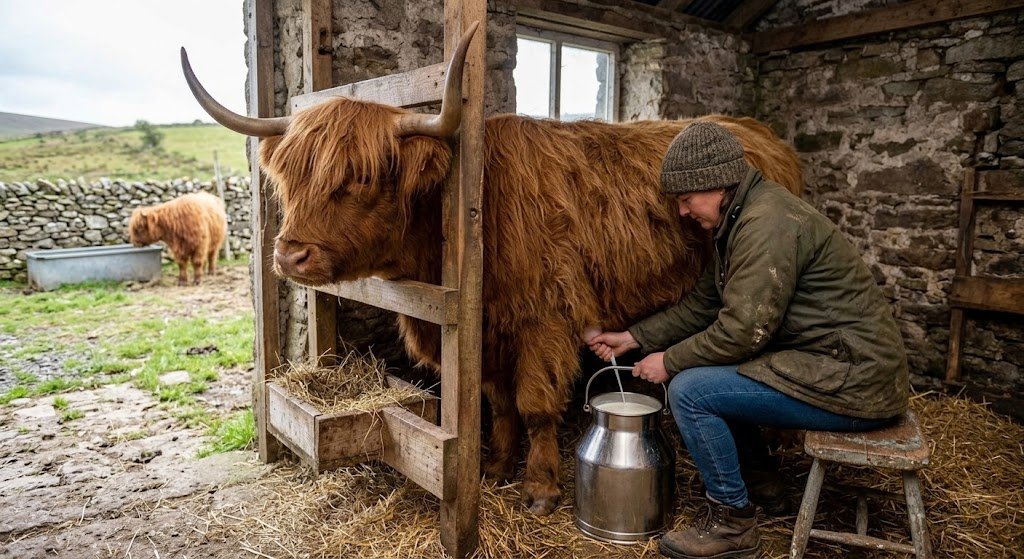
What Makes the Milk Itself Worth the Effort
What Highland milk lacks in volume, it can make up for in richness. Highland milk is known for having relatively high butterfat, which gives it a rich, creamy texture.
Butterfat levels can vary considerably between individual cows, their stage of lactation, diet, and genetics, but Highland milk can be noticeably richer than standard dairy milk. That richness makes it particularly appealing for homemade butter, ghee, cream, and small batches of cheese.
If you only need milk for your own household, having a smaller quantity of rich milk may be more useful than dealing with several gallons every day from a high-producing dairy cow.
The Practical Challenges of Milking This Breed
Milking a Mini Highland is certainly possible, but there are a few practical differences to keep in mind. One of the biggest is udder size. Highlands generally have smaller udders and teats than cattle that have been selectively bred for dairy production.
Hand milking can therefore take a little more practice, particularly if you are accustomed to a dairy breed. Then there is all that Highland hair.
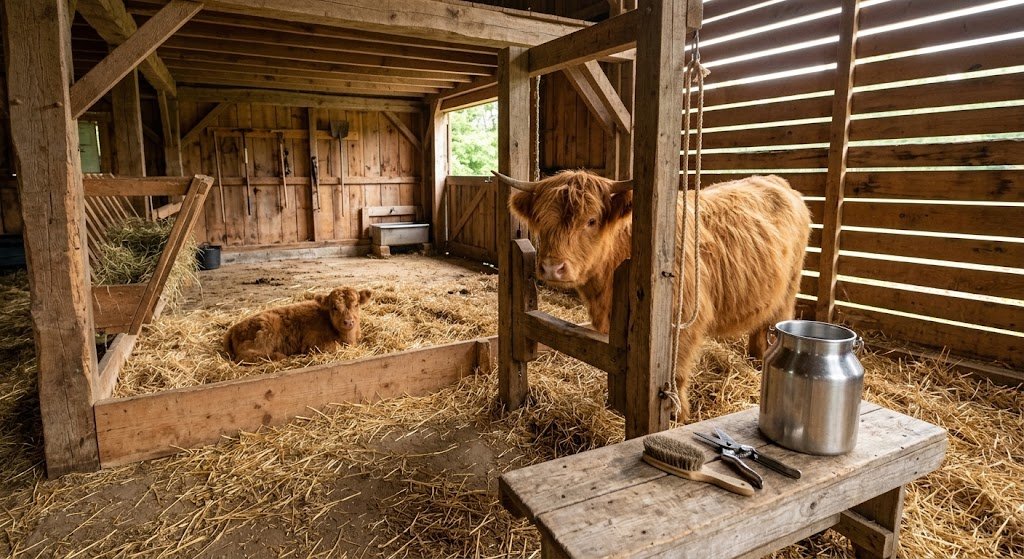
The long coat that makes these cattle so recognizable can grow around the udder as well. Keeping that area trimmed and clean can make milking much easier and help prevent dirt and hair from ending up in the milk.
Highlands are also strong mothers. Some cows may let their milk down more readily when their calf is nearby, which is one reason calf sharing can work particularly well with this breed.
Is This Breed the Right Fit for Your Goals?
Whether a Mini Highland makes sense as a family milk cow really depends on what you expect from her. If you primarily want a hardy, versatile cow and would consider fresh household milk an added benefit, a Mini Highland can be a great fit.
You get an animal that can graze, raise calves, contribute to pasture management, and potentially provide a useful amount of rich milk. If milk production is your main reason for owning a cow, however, a dairy or dual-purpose breed may make more sense.
A Jersey will generally provide much more milk, while a Dexter can be an attractive option for people who want a smaller cow with stronger dairy potential. Some homesteaders also choose Highland-Jersey crosses in an effort to combine some of the Highland’s hardiness with improved dairy characteristics.
Frequently Asked Questions
Can you actually milk a Mini Highland cow?
Yes. Mini Highland cows can be milked, although they generally produce considerably less milk than cattle bred specifically for dairy production.
How much milk does a Mini Highland cow produce?
Production varies by genetics, diet, stage of lactation, and whether the cow is sharing milk with a calf. Some may provide around 1 to 1.5 gallons per day during calf sharing, with certain cows producing more when milked exclusively.
Is Highland milk different from regular dairy milk?
It can be. Highland milk is known for being rich and relatively high in butterfat, giving it a creamy texture that works particularly well for products such as butter and cheese.
Is milking this breed hard?
Not necessarily, but it can take some adjustment. Smaller teats, a hairy udder, and the cow’s relationship with her calf can make the process different from milking a traditional dairy breed.
Should a beginner start with a Mini Highland for milking?
If producing milk is your main goal, a Jersey, Dexter, or another dairy-oriented breed may be easier for a first-time milker. If you already want a Highland for its other qualities and household milk is an added bonus, milking one can certainly be worthwhile.
Conclusion
Yes, you can milk a Mini Highland cow, and for some homesteads, it can be a surprisingly useful part of owning the breed. The key is keeping your expectations realistic. Highlands were developed for hardiness, efficient grazing, strong mothering ability, and beef production rather than filling a milk pail every morning.
If you only need a modest amount of rich milk for your household, that may not be a disadvantage at all. A Mini Highland can provide milk while still offering many of the other qualities that make the breed so appealing.
If you’re looking for a healthy Mini Highland cow for your own property, we work directly with verified breeders and can help you find an animal that fits your setup and goals. Reach out to us, and we’ll walk you through your options.