What Makes the Pygora Goat Breed Ideal for Fiber Farming
At our farm, the Pygora is usually the goat we mention when someone is more interested in fiber than milk or meat. It is a small, purpose-bred fiber goat that was developed by crossing Pygmy and Angora goats.
The fleece is what really makes this breed stand out. Some Pygoras produce long, shiny fiber that looks similar to mohair, while others grow a much shorter and very soft cashmere-like fleece. In this guide, we’ll look at the breed’s history, fiber types, size, colors, temperament, harvesting, feeding, and everyday care.
Where the Pygora Goat Came From
The story of the Pygora began in Oregon during the early 1980s. Katharine Jorgensen of Oregon City was already working with Pygmy goats as a breeder and 4-H judge. She also had an interest in spinning and weaving, which led her to explore the idea of developing a useful fiber goat.
During a trip through the Southwest, she came across long-haired goats with colorful coats. This gave her the idea of combining some of those traits. She wanted to keep the small size and interesting colors of the Pygmy while adding the mohair-type fleece of the Angora.
She started crossing registered Pygmy goats with registered Angora goats and worked with a geneticist during the project. The first-generation kids did not immediately turn out as she had hoped. They were white, and their fleece had characteristics somewhere between mohair and cashmere.
The breeding program continued through several generations. By 1986, colored fleece was appearing in white, silver, and gray, with some fibers growing to around five inches long.
In 1987, the Pygora Breeders Association was established to maintain a registry for the breed. The name Pygora is trademarked, so registered animals need documented ancestry connecting them to registered Pygmy and Angora goats.
The Three Fiber Types Explained Properly
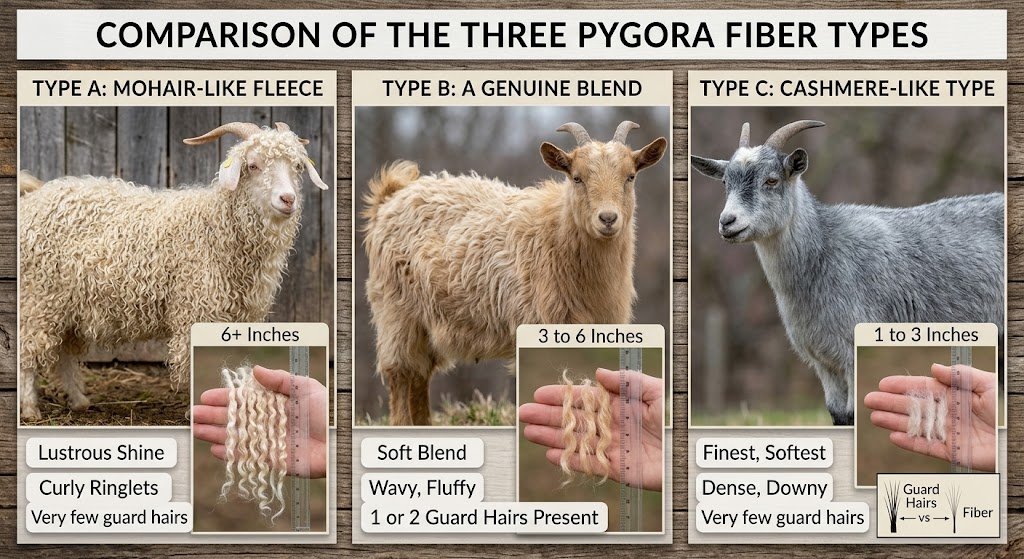
Pygora fleece can look and feel quite different from one goat to another. The breed is divided into three fiber types, and each one has its own characteristics and uses.
One important point is that Type C should not be considered an inferior version of Type A just because its fiber is shorter. Type C is actually valued for its extremely fine and soft texture.
Type A: Mohair-Like Fleece
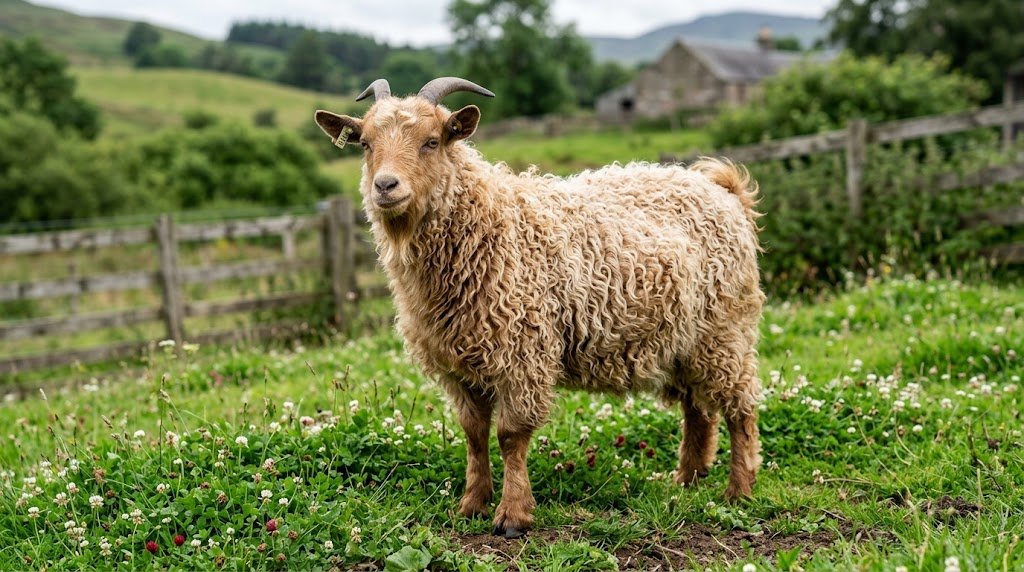
Type A is the Pygora fleece that most closely resembles Angora fiber. The fiber can grow to around six inches long and normally has a noticeable shine with a soft, curly or ringlet-like appearance.
Good Type A fleece also contains very few coarse guard hairs. If you imagine the long, smooth fiber commonly associated with mohair, Type A is the Pygora type that comes closest to that look and feel.
Type B: A Genuine Blend
Type B falls between Type A and Type C. Its fiber is generally around three to six inches long, and one or two guard hairs may be present.
The texture has some of the wave you would expect from mohair, while still having a softer feel. For people who spin their own fiber, this middle type can be especially useful because it works well for different kinds of projects.
Type C: The Cashmere-Like Type
Type C has much shorter fiber, usually around one to three inches long. If you’re unfamiliar with the breed, that short length might make you think the fleece is less valuable.
The texture is what makes Type C special. It is extremely fine and soft and is closely linked with the downy undercoat inherited from the Pygmy side. So with this type, shorter fiber does not mean lower quality. Its softness is exactly why many fiber enthusiasts appreciate it.
Size and Weight
One practical advantage of the Pygora is its relatively small size. These goats are much smaller than full-sized Angoras, which can make them easier to manage when pasture or housing space is limited.
- Bucks generally weigh between 75 and 95 pounds. They usually have a heavier build and thicker horns than does.
- Does normally weigh around 64 to 75 pounds and have a lighter, finer frame.
- Newborn kids weigh roughly 5 pounds and continue gaining weight as they mature.
Colors and Coat Patterns
Color was one of the traits breeders wanted to preserve when developing the Pygora, so there is plenty of variation within the breed. Pygoras can be found in white, red, caramel, brown, black, and gray. Some goats have a solid coat, while others show combinations of colors that give them a more distinctive appearance.
Several recognizable patterns can also occur, including badgerface, moonspot, and chamoisee. Fiber quality is usually the main reason people choose a Pygora, but the color and pattern can certainly make one goat look very different from another.
Temperament and Everyday Behavior
Pygoras are generally pleasant goats to have around the farm. They can have the lively and curious personality associated with Pygmy goats, while also showing some of the calmer behavior found in Angoras.
Playful Yet Genuinely Docile
A Pygora can be curious and active without being especially difficult to handle. Many owners find them friendly and affectionate, particularly when the goats have been handled regularly from an early age.
Their smaller size is another useful advantage. A full-sized Angora is a substantial animal to manage on a small farm, whereas a Pygora is easier for most people to work with. With proper handling, they can also be enjoyable companions for families.
Social Behavior and Herd Needs
A Pygora should not be kept alone. Like other goats, they are social herd animals and need the company of other goats to feel secure and maintain normal behavior.
If you’re getting your first Pygora, keeping at least two is generally a better approach. They can graze together, rest together, and provide the companionship that a single goat would otherwise lack.
Fiber Harvesting and Yield
The amount of fleece produced by a Pygora can vary quite a bit between individual animals. A typical goat may produce around 6 ounces to 2 pounds of usable fiber from a single shearing.
Age, nutrition, genetics, season, and fleece type can all affect the final amount. Even two goats raised under the same conditions may produce noticeably different quantities of usable fiber.
Many owners shear their Pygoras twice a year, often during spring and fall. However, it is better not to follow the calendar blindly. Check areas such as the hind legs and thighs because this is where fleece may begin matting first.
Some breeders also shear does before they kid in late winter or early spring. Before collecting the fleece, brushing or gently blowing out loose dirt and debris can help keep the harvested fiber cleaner.
Land, Diet, and Daily Care
Pygoras do not require the same amount of space or infrastructure as larger fiber goats. Their smaller size can make them a practical option for smaller farms, but they still need suitable housing, secure fencing, and a balanced diet.
- Good pasture and quality hay should make up most of their daily diet.
- Keep grazing areas as clean as possible because burrs, seeds, and other debris can become caught in the fleece.
- Fresh water should always be available, along with a goat-specific mineral supplement.
- Routine veterinary care, vaccinations, parasite control, and regular hoof trimming are all important parts of their care.
- Hooves commonly need trimming every six to eight weeks, although the ideal schedule depends on the individual goat and the type of ground it lives on.
- Check the fleece regularly, especially around the hindquarters, so small mats can be dealt with before they become larger problems.
Cost and What Drives It
Pygora prices can vary considerably depending on the type of goat you’re buying. An unregistered kid is very different from registered breeding stock with desirable fiber and strong breeding potential.
Unregistered kids commonly sell for around $150 to $350. Registered breeding animals may cost more, especially when they have desirable Type A or Type C fleece, documented lineage, or an unusual color or pattern.
Registration with the Pygora Breeders Association can be one factor in the price. Fiber type, pedigree, coat color, and the overall quality of the animal can also influence what a breeder charges.
Frequently Asked Questions
What breeds make up a Pygora goat?
A Pygora comes from a registered Pygmy goat and a registered Angora goat. The breed was developed to combine the smaller size of the Pygmy with the useful fiber characteristics of the Angora.
What are the three fiber types?
Type A is the longest and has the strongest mohair-like characteristics. Type B falls between the other two and combines traits from both. Type C is the shortest but produces very fine, soft, cashmere-like fiber.
How big does a Pygora goat get?
Bucks generally weigh about 75 to 95 pounds. Does are smaller and usually weigh around 64 to 75 pounds.
How much fiber does one goat produce?
A Pygora can produce approximately 6 ounces to 2 pounds of usable fiber per shearing. The actual amount depends on the goat’s age, genetics, nutrition, fleece type, and other individual factors.
Do they need a companion?
Yes. Pygoras are social goats and should not be kept alone. Keeping at least two goats together gives them the companionship they need for normal herd behavior.
Conclusion
The Pygora is a small goat with an impressive range of fiber qualities. One animal may produce long, shiny mohair-like fleece, while another may grow the shorter and exceptionally soft fiber associated with Type C. If you’re considering one for fiber production, it is worth understanding the three fleece types before you buy. Type C, in particular, should not be overlooked simply because the fiber is short. Its fine texture is exactly what gives it value.
For people who want a fiber goat without the space or interest required for a larger Angora herd, the Pygora can be a practical option. Its smaller size, variety of fleece, and generally friendly nature make it an interesting choice for a smaller farm.
If you’re looking for a healthy Pygora goat for your own property, we work directly with verified breeders and can help you find the right animal for your setup. Reach out to us, and we’ll walk you through your options from start to finish.