Understanding the Belted Galloway Cow Traits and Origins
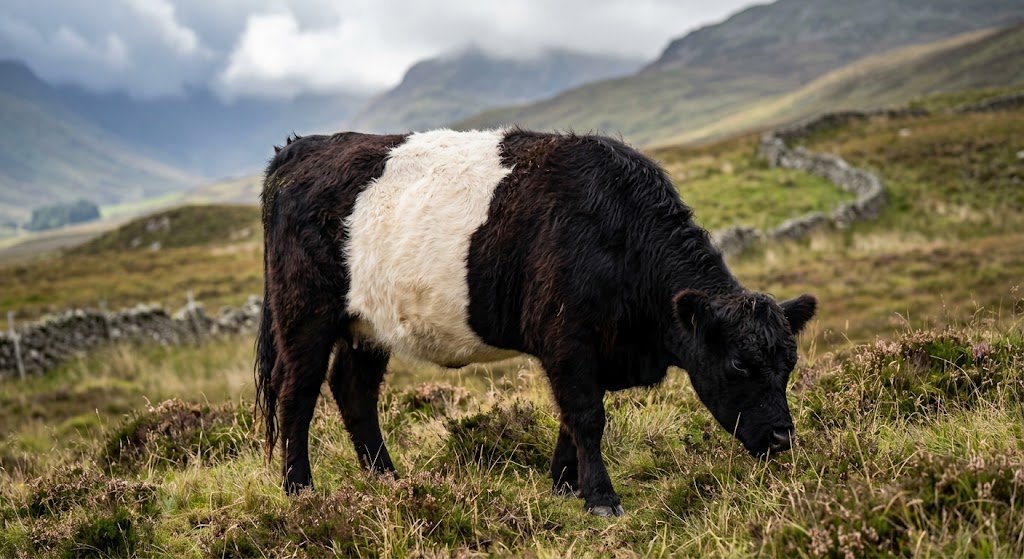
At our farm, the Belted Galloway cow is one of those breeds that people notice right away. The wide white belt around its black, red, or dun body gives it a look that is hard to miss. But this breed is more than just good-looking. It is also a hardy animal with a strong reputation for beef production.
In this guide, we’ll look at where Belted Galloways came from, why they are sometimes confused with Dutch Belted cattle, and how big they get. We’ll also cover their coat, coloring, temperament, beef quality, land needs, daily care, and typical cost.
A Scottish Breed With a Mysterious Belt
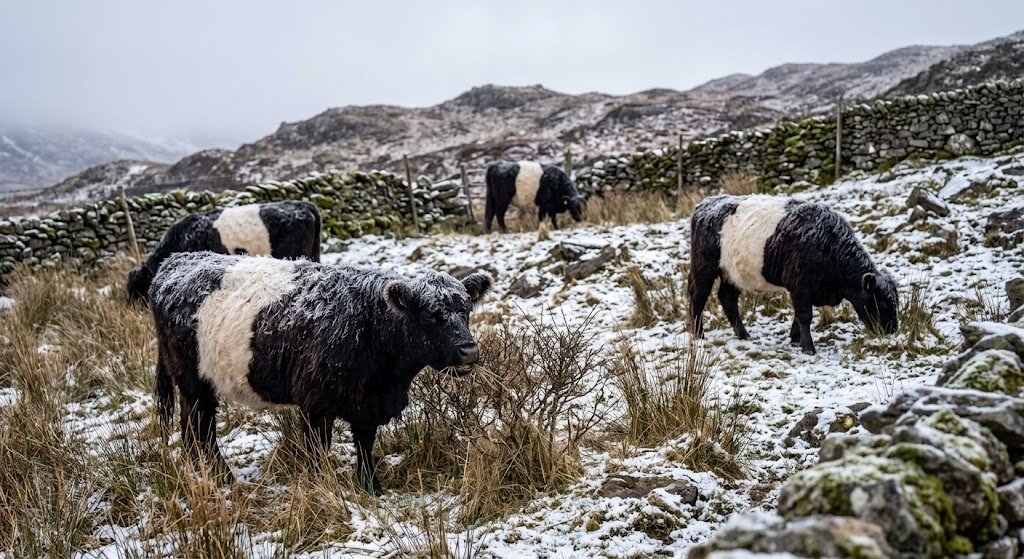
Belted Galloways come from standard Galloway cattle, a hardy breed that developed in the rugged hill country of southwestern Scotland during the late 1700s and early 1800s. The exact origin of their famous white belt is still uncertain. However, many historians believe it may have come from crossing with Dutch Lakenvelder cattle sometime during the 17th or 18th century.
Belted cattle were already appearing in Scottish records by the 16th century. A separate herd book for the belted variety was eventually established in the 1920s, helping distinguish these cattle from the solid-colored Galloway.
The breed arrived in North America in 1939. A bull and 12 bred heifers were brought to a farm in New York. The American Belted Galloway Breeders Association was later founded in 1951 to maintain the breed’s registry.
Don’t Confuse This Breed With Dutch Belted Cattle
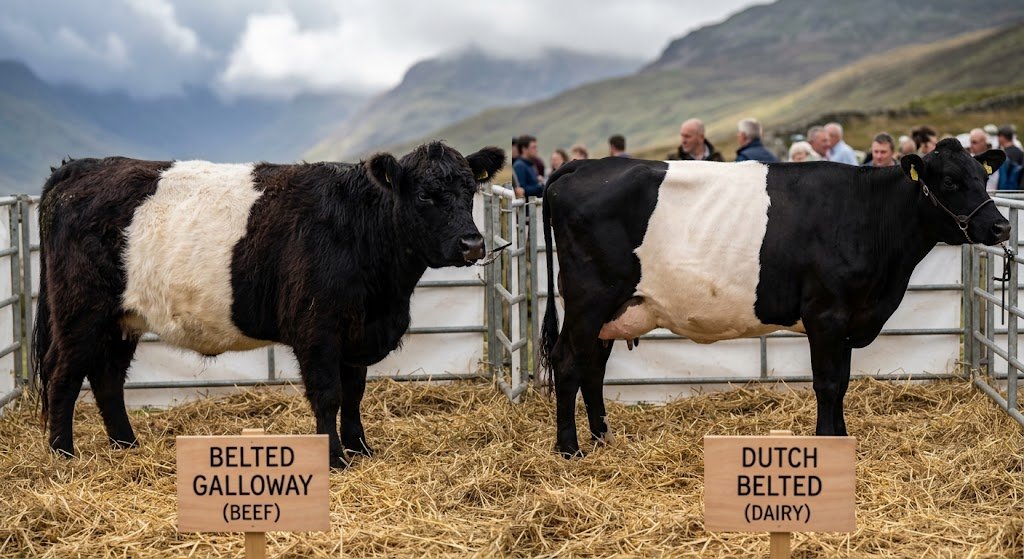
This is an easy mistake to make because Dutch Belted cattle have the same basic white belt pattern. At first glance, photographs of the two breeds can even look surprisingly similar.
The important difference is what each breed was developed for. Belted Galloways are Scottish beef cattle known for hardiness, grazing ability, and production on rough land. Dutch Belted cattle are an American dairy breed that descended from Lakenvelder cattle and were developed mainly for milk production.
So, if you’re buying a belted animal, don’t rely on the white belt alone when identifying the breed. Always check the breed information and registration details to make sure you’re getting the type of cattle you actually want.
Size and Weight
Belted Galloways are medium to large beef cattle with a sturdy build. Their body structure suits the rough conditions and pasture-based environments where the breed has traditionally been raised.
- Mature bulls typically weigh between 1,800 and 2,000 pounds by around five years of age.
- Mature cows generally weigh between 1,100 and 1,300 pounds.
- Bull calves usually weigh around 70 to 80 pounds at birth.
- Heifer calves are generally about 10 pounds lighter at birth.
- Heifers are commonly bred between 14 and 18 months of age, or after reaching around 700 to 800 pounds, depending on the breeder’s approach.
The Coat and Belt Pattern
One of the most useful features of a Belted Galloway is its thick double coat. It isn’t simply part of the breed’s appearance. The coat helps protect these cattle from cold, wet, and windy weather.
A Genuinely Insulating Double Coat
The breed has a dense, soft undercoat underneath a longer and somewhat shaggy outer coat. The outer hair is normally shed during warmer weather, allowing the animal to adjust as temperatures change.
The coat can contain around 4,000 hairs per square inch, giving it impressive insulating ability. This natural protection helps Belted Galloways handle cold and wet conditions without needing the same level of shelter that some less hardy cattle require.
Belt Color and Genetics
Black is the most common body color, although red and dun Belted Galloways are also found. Regardless of the body color, the animal has the familiar broad white belt around its middle.
The belt is a dominant genetic trait, but it does not appear perfectly in every calf. Solid-colored calves can occasionally be born in a belted herd. Likewise, a belted calf can sometimes appear in a herd of solid-colored Galloways.
Temperament and Everyday Behavior
Belted Galloways are well known for their generally calm and docile nature. That can make a real difference when you’re working with a large animal on a small farm or pasture.
They are also known for strong maternal instincts and good calving ability. The cows can be attentive mothers, while the herd itself tends to remain alert to what is happening around it.
Some owners also value the breed for its natural vigilance. A group of cattle grazing together can sometimes discourage smaller predators from coming too close to the pasture. This does not replace proper livestock protection, but it can be an added benefit for farms where animals spend a lot of time outdoors.
Beef Quality and Land Management
Belted Galloways are not raised only because of their unusual appearance. They are also valued for their beef and their ability to make use of rough grazing land.
Lean, High Quality Beef
The breed produces beef that is known for good flavor and relatively low fat content. Some sources report total fat around 2 percent, with saturated fat around 1 percent.
Carcasses commonly dress out at around 60 to 62 percent of live weight. These characteristics can make Belted Galloway beef appealing for grass-fed and organic specialty beef markets.
An Efficient Grazer on Rough Land
Belted Galloways are comfortable eating rough forage and browsing vegetation that other cattle may not use as efficiently. Their ability to make use of less productive land is one reason the breed is sometimes kept for vegetation management as well as beef production.
For farms with rough pasture, brushy areas, or land that is difficult to manage with more specialized cattle, this can be an important advantage.
Land, Diet, and Daily Care
Daily care is fairly straightforward when the animals have suitable pasture, fencing, and basic protection from severe weather. Their natural hardiness means they generally don’t require complicated housing or intensive management.
- Cattle are herd animals, so they usually do better when kept with other cattle rather than completely alone.
- Good pasture and rough forage should make up most of the diet, while hay is especially useful when pasture quality drops during winter.
- Strong fencing is important, along with basic shelter from extreme wind and weather.
- Regular vaccinations, parasite control, and hoof checks are part of normal cattle care.
- With good management, Belted Galloways can have a long lifespan of around 17 to 20 years.
Cost and What Drives It
The price of a Belted Galloway can vary quite a bit depending on the animal’s age, registration, breeding history, and overall quality. Their distinctive appearance can also add interest among buyers looking for both useful beef cattle and visually unusual livestock.
Registered calves commonly fall around the $1,000 to $2,500 range. Proven breeding animals, strong bloodlines, documented parentage, and particularly well-defined belt markings can push prices higher.
Registration with the Belted Galloway Society, reliable pedigree records, and good overall conformation are all factors that can affect the final price of an individual animal.
Frequently Asked Questions
Is a Belted Galloway the same as a regular Galloway?
They share essentially the same origin and many of the same characteristics. The main visual difference is the distinctive white belt found on Belted Galloways.
How big does a Belted Galloway get?
Mature bulls commonly weigh around 1,800 to 2,000 pounds, while mature cows generally weigh between 1,100 and 1,300 pounds.
Is Belted Galloway the same as Dutch Belted cattle?
No. Although both have a similar white belt pattern, Belted Galloways are Scottish beef cattle, while Dutch Belted cattle are an American dairy breed.
Does the belt always breed true?
No. The belt is a dominant genetic trait, but it does not appear in every calf. Solid-colored calves can occasionally occur in belted herds, and belted calves can also appear in solid Galloway herds.
How long do Belted Galloways typically live?
With good care and proper management, Belted Galloways commonly live around 17 to 20 years, which is a long lifespan for a beef breed.
Conclusion
The Belted Galloway cow combines an unusual appearance with useful traits that have made the breed popular with cattle owners. Its thick coat, calm nature, grazing ability, and lean beef production all add to its appeal.
If you’re considering one for your property, it is also important to know the difference between Belted Galloway and Dutch Belted cattle. The white belt may look similar, but the two breeds have very different histories and purposes.
If you’re looking for a healthy Belted Galloway cow for your own property, we work directly with verified breeders and can help you find the right animal for your setup. Reach out to us and we’ll walk you through your options from start to finish.