Complete Pygmy Goat Profile Breed Traits Diet and Housing
Pygmy goats are the go-to choice for many people, rightfully so. With their smaller size and stocky build, they have a huge personality. West Africa is where they originated. Today, many people select this breed to keep on even smaller properties, drawn to a hardy goat without needing much land.
Answering and anticipating the questions you will have about this breed will save you time in the long run. You will know exactly what to expect.
Alt text: Dexter cow standing on small farm pasture
What Is A Pygmy Goat?
A pygmy goat is a naturally small breed, not a miniature or teacup variety created by selectively breeding down a larger breed. It’s a distinct breed recognized through history, with a consistent size range and temperament.
There are sellers that will try to pass an individual animal off as a mini or teacup version, but what’s more accurate is describing an animal as being on the small end of the breed’s natural size. This breed sets its own size standard; it’s already small to begin with.
Breed Origin and History
The breed was developed in West Africa by farmers for use in small farms and households with limited land, as it was both hardy and manageable. In the 20th century, it was introduced to zoos and farms in Europe and North America because of its compact size and gentle temperament, which made it popular beyond its original working purpose.
Breeders in the US formalized the breed during this period and defined its standards, which is why organizations like the National Pygmy Goat Association exist to maintain registration of bloodlines, size, and traits.
Adult Size and Growth Stages
Size is right up there with purchase price on most buyers’ minds, since it directly relates to space, fencing, and feed. Unlike many livestock breeds, the growth rate here is predictable, so it’s easy to forecast what the adult size will likely be. Buyers can also get a good sense of eventual adult size by looking at a kid’s current developmental stage.
Adult Size Range
The height measurement is taken at the shoulder once an animal has reached full maturity, around 2 to 3 years.
- Adults range in height from 16 to 23 inches at the shoulder.
- Mature weights generally range from 40 to 75 pounds, with males typically heavier than females.
Variation does happen due to genetics and parent size, so it’s worth asking a breeder for parent measurements.
Growth From Birth to Adulthood
A kid weighs less than three pounds at birth. Most reach close to their adult size by around 1.5 years, but full maturity isn’t reached until closer to three years old.
Coat Colors and Markings
Most photos of kids online show a solid coloring, but it’s largely pattern and shade that determine how an individual is judged against breed standards. Coat outcome depends on both parents, so kids from the same kidding can end up looking quite different from one another. Two broad pattern types are worth knowing: solid, meaning a uniform color, and broken, generally a mix of two colors with white.
Common Coat Patterns
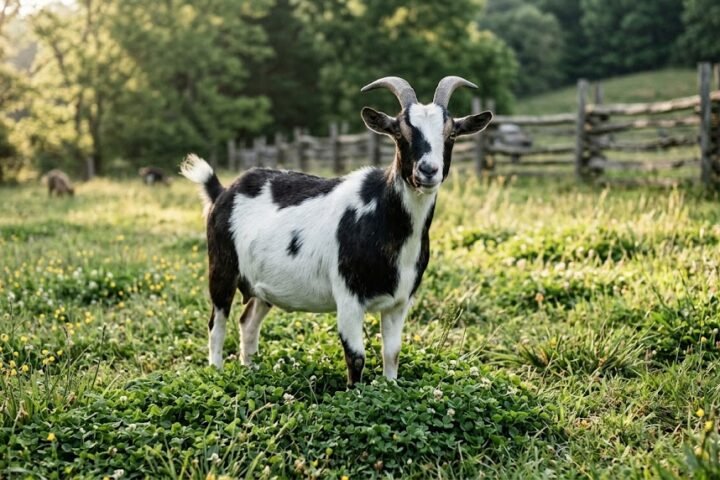
Naturally occurring colors in this breed include black, white, gray, brown, and caramel, often with distinct patterns like the classic “cou blanc” white neck pattern or a fully agouti coat. Coat length stays short and dense year-round but can thicken somewhat in colder weather.
Breed associations document standard coat patterns in detail, though this level of detail typically matters less to owners looking for a household pet rather than registered breeding stock.

Temperament and Everyday Behavior
This breed is generally social and calm, which is a big reason it’s so popular with families buying their first livestock. That consistent temperament also makes behavior easy to predict once an animal settles in.
A Curious, People-Friendly Breed
These animals become friendly with people and easy to manage day to day after regular handling from a young age. They’re also fun to train, since they’re naturally curious, which makes both tasks noticeably simpler than with most livestock.
Social Behavior and Herd Needs
They genuinely enjoy the company of their own kind. Goats are obligate herd animals and should never be housed alone, so new owners should plan on bringing home at least two.
Land, Diet, and Daily Needs
Because of their smaller size, they require significantly less land than larger livestock, which makes this breed a good fit for people with limited acreage. That said, adopting one still means planning for space, diet, and routine health checks.
Space
Many owners maintain a small herd on a quarter acre or less, depending largely on pasture quality and how much supplemental feeding is provided. These animals will take any opportunity to escape, so fencing quality matters far more than raw acreage.
Feeding
Feeding is straightforward given the smaller size. Quality hay and pasture grass should make up most of the diet. A goat-specific mineral supplement helps cover nutritional gaps that forage alone can’t fill, and fresh water needs to stay available at all times.
Grain should stay limited, since these goats already lean toward weight gain. The smaller frame does lower feed costs overall, which matters more for small farms and families working with a tighter budget. For a broader overview of goat nutrition, water, minerals, pasture management, and fencing, see this Penn State Extension guide to raising goats.
Routine Health Care
Preventive care stays the same regardless of size. Animals remain healthy with regular checkups, core vaccinations, deworming, and hoof trimming every 6 to 8 weeks.
Lifespan and General Health
Compared to other small livestock, this breed is considered a hardy one, which adds to its appeal for first-time owners. A longer natural lifespan also means more years to make the upfront cost and effort of ownership worthwhile compared to a shorter-lived breed. Genetics play a role in overall hardiness, but so does the consistency of routine care. Here’s what to expect in terms of years and health outcomes.
How Long They Typically Live
With good care, they typically live between 10 and 15 years, and strong nutrition can push that toward the upper end or beyond.

The Factors Behind Cost
Cost is perhaps the most common question from buyers, and age, sex, and documentation explain most of the price variance rather than any single number. A registered, parentage-verified animal will almost always cost more than an unregistered one of the same size, since documentation adds value for future breeders.
Even buyers who just want a companion animal benefit from understanding these factors, since they explain why similar looking animals can be priced so differently.
Expected Price Range
A young, unregistered animal typically costs between $150 and $300. A proven doe or buck costs more, often somewhere between $500 and $1,000, though prices can climb higher than that depending on the animal.
Key Cost Factors
- Registration status and documented parentage through a recognized breed association affect price.
- Age matters, as with most livestock, especially for breeding stock.
- Coat pattern and how closely it matches breed standards is also a factor.
- Supply and demand in your area, along with how established the breeder is locally, plays a role too.
Buying Tips and Where to Look
As demand for this breed grows, buyers are encouraged to do extra research to avoid unhealthy animals, especially when dealing with unfamiliar sellers. Many sellers don’t disclose health information or documentation upfront, so knowing what to ask beforehand matters. Taking the time to research pays off almost every time with a healthier, better suited animal. Here’s what to ask and what red flags to watch for.
Questions Worth Asking a Breeder
Whether you’re viewing a listing or have reached out directly, these questions will tell you more than the photos ever will.
- Ask for both parents’ documented height and weight.
- Ask for registration papers if the animal is being sold as purebred.
- Ask for vaccination records and any known health issues within the line.
- Visit the site in person to view the animal whenever possible.
Buyers should also understand the official identification requirements that may apply to goats, particularly when animals are moved between states. The USDA APHIS sheep and goat identification guide explains accepted identification methods and recordkeeping requirements.
Red Flags to Avoid
Very low pricing, sellers reluctant to provide parent measurements, and listings with no verifiable history are all worth avoiding. Sellers who are upfront and thorough tend to answer these kinds of questions without hesitation.
Frequently Asked Questions
How much does it cost?
Prices for a pet-quality kid range from $150 to $300, with more expensive animals sitting at the upper end. Verified, documented bloodlines command a higher price.
How big does it get?
They grow to be between 16 and 23 inches at the shoulder, weighing between 40 and 75 pounds as adults. Males typically weigh in on the heavier side.
What is its average lifespan?
With proper diet and routine hoof and parasite care, they can live between 10 and 15 years.
Can they be house pets?
No, not typically. Owners generally keep them sheltered with outdoor access rather than as indoor pets, and they need another goat as company to stay happy.
How much space do they need?
They can stay fairly content on a smaller footprint as long as pasture quality and fencing are kept up, since good fencing matters more than raw acreage.
Are they good with kids?
They’re generally safe around children and get along well with families that have young kids, as well as families new to keeping livestock, thanks to their calm nature.
Conclusion
Many people have adopted the pygmy goat because of the small stature and low upkeep it brings to farming. It thrives in even the most limited space as long as there’s decent pasture. This breed adds personality to a property of any size, while costing less and needing less overall care, and its calm nature makes it an easy fit for a family.
Looking for a healthy, well documented pygmy goat for your property? We connect directly with reputable breeders, so we can help find the right goat for your setup. Just reach out to see what we’ve got available.