Nigerian Pygmy Goat Care Housing Needs and Breed Temperament
At our farm, the Nigerian Pygmy goat comes up constantly, and there’s usually confusion behind the question. This isn’t a standalone breed with its own registry. It’s a deliberate crossbreed between two distinct small goat breeds, the Pygmy and the Nigerian Dwarf. Knowing that distinction matters more than most buyers realize before they bring one home.
There’s a breeding safety detail here that almost no other resource explains clearly. We’ll get to that. But first, the basics.
What Is A Nigerian Pygmy Goat
A Nigerian Pygmy goat is the offspring of a Pygmy goat and a Nigerian Dwarf goat. Both breeds share West African ancestry, but they were bred for completely different jobs. Pygmies were refined for a stocky, heavy-boned, meat-type build. Nigerian Dwarfs went the other direction, bred toward a slender, dairy-type frame with an unusually wide range of accepted colors.
Since it’s a cross and not a recognized breed, there’s no official standard for what one should look like. One kid might lean hard toward the Pygmy side. Its littermate might look almost pure Nigerian Dwarf. That’s just how crosses go.
Why Breeders Create This Cross
Breeders cross these two to combine traits. You get the compact, sturdy build of the Pygmy, plus the striking coloring and occasional blue eyes carried by the Nigerian Dwarf. Small and colorful. That’s the combination a lot of hobby breeders are chasing.
Registration Status and Generation Identification
This is the part almost nobody covers, and it matters if you’re buying, breeding, or just trying to figure out what you actually own. Since this cross isn’t a recognized breed, an animal’s registration options depend entirely on how many generations removed it is from the original pairing.
Why It Can’t Be Registered as Purebred
No major goat registry, including the American Goat Society or the American Dairy Goat Association, recognizes the Nigerian Pygmy cross as its own breed. That means an animal from this cross can’t compete in breed-specific show classes or enter most 4-H programs under either parent breed’s name. Doesn’t matter how many generations back the original cross happened.
What Actually Varies Between Generations
Here’s something worth clearing up: both Pygmy and Nigerian Dwarf goats have naturally erect ears. An F1 cross will have upright ears too, not drop or floppy ones. What actually shifts between generations is body thickness, leg length, and head shape. A kid closer to the Pygmy side tends to carry a thicker, blockier build with a wider head. One leaning Nigerian Dwarf will look more refined through the leg and face. That’s the real clue to watch for, not ear shape.
Adult Size and Growth
Size overlaps heavily between the two parent breeds, which makes this cross tricky to size up at a glance. Growth still follows a fairly predictable path, so you can get a decent read on adult size well before an animal is fully grown. Bone structure varies more here than in either purebred parent, so weight alone won’t tell you much. Height at the withers is the more reliable number to track.
Adult Size Range
Height gets measured at the withers once an animal hits full maturity, usually by age 2 to 3.
- Adults commonly stand 16 to 23 inches at the withers, overlapping both parent breeds’ ranges.
- Mature weight typically runs 40 to 85 pounds. Animals leaning toward Pygmy genetics tend to run heavier and stockier for their height.
- Build varies more in this cross than in either purebred parent. Two goats standing the exact same height can look completely different in bone structure.
Growth From Birth to Adulthood
Kids usually weigh 2 to 4 pounds at birth, growing steadily through the first year. Most are close to adult size by around 18 months, with full maturity settling in by age 2 to 3.
Coat Colors and Physical Traits
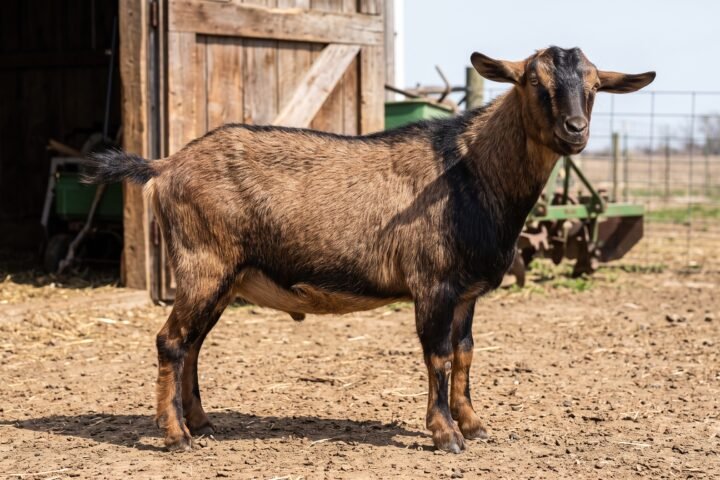
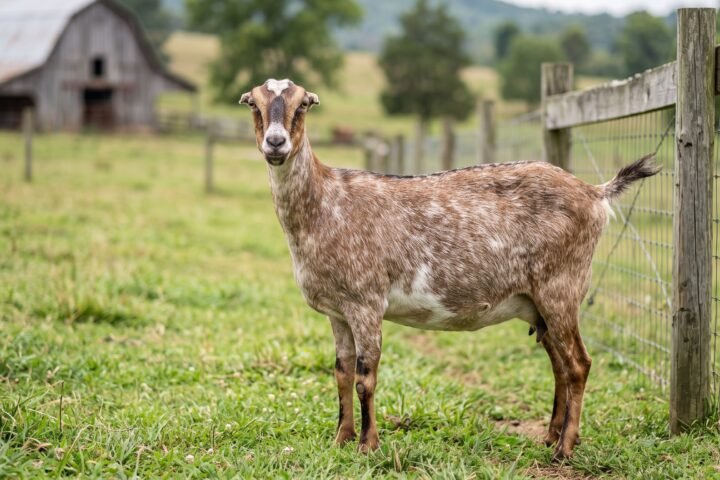
Coloring in this cross tends to lean toward the Nigerian Dwarf side, since that breed accepts an unusually wide range of colors and patterns compared to most goats. Pygmy genetics contribute less to coloring but show up in denser bone structure and a shorter, thicker neck. That’s one of the easier physical clues for telling a Pygmy-leaning individual apart from a Nigerian Dwarf-leaning one.
Common Colors and Patterns
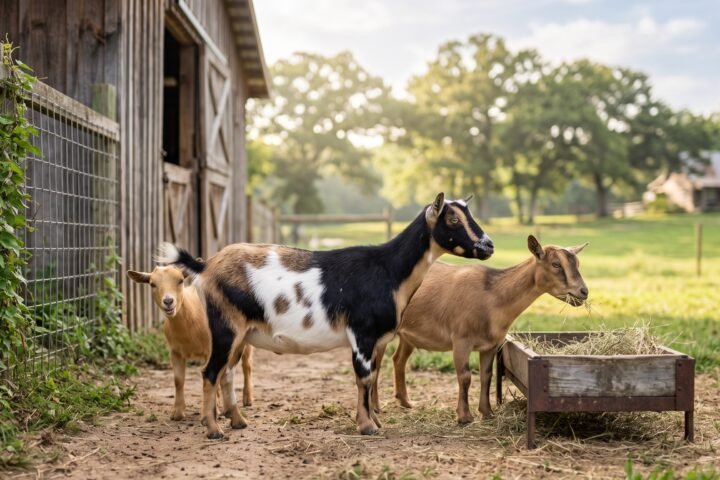
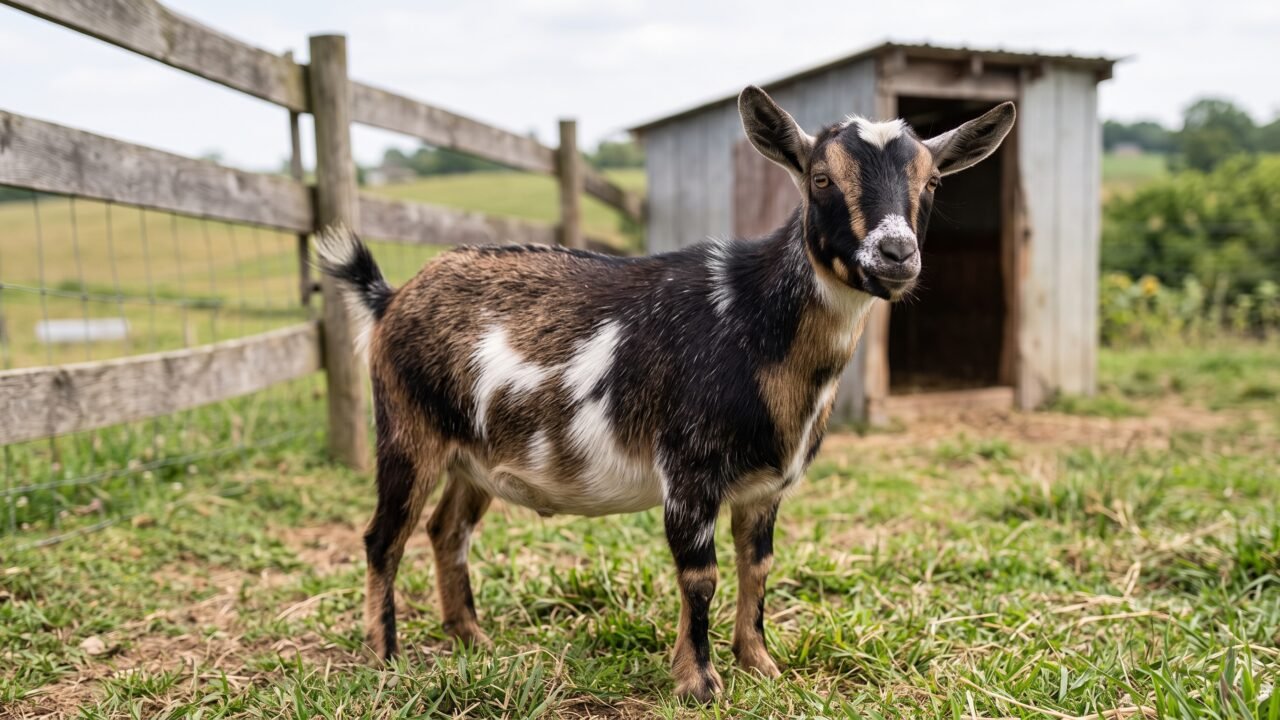
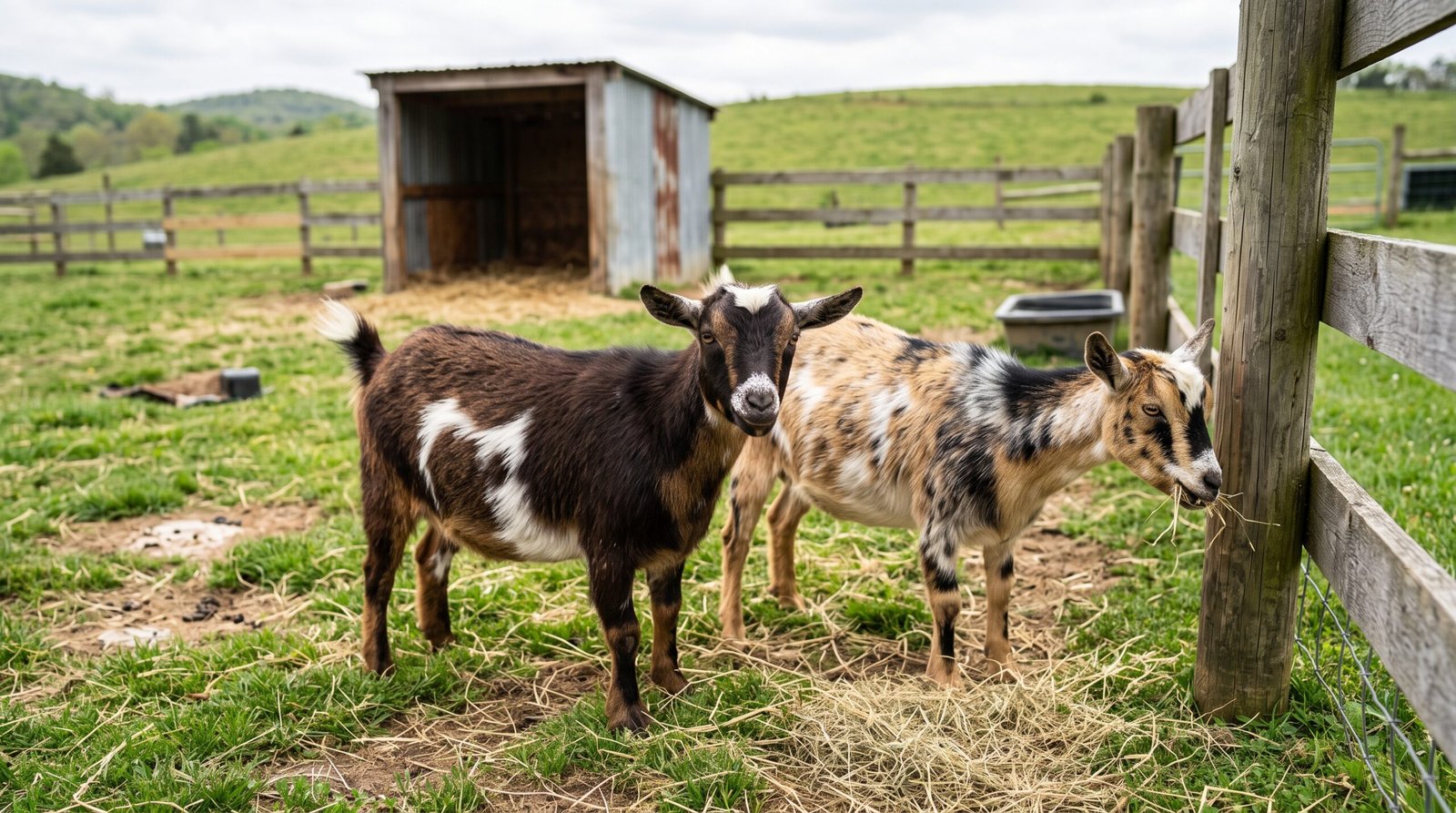
Colors run the gamut: black, white, chocolate, gold, broken patterns, roan. Sometimes paired with blue eyes inherited from the Nigerian Dwarf side. Body build falls somewhere between the two parents, sometimes closer to the Pygmy’s stocky frame, sometimes closer to the Nigerian Dwarf’s more refined, dairy-type build.
Temperament and Everyday Behavior
Both parent breeds share a playful, people-friendly temperament, and the cross generally reflects that shared personality rather than favoring one side. That consistency is genuinely reassuring compared to other crosses, since buyers don’t have to guess whose disposition is going to show up as the kid grows.
A Friendly, Sometimes Mischievous Companion
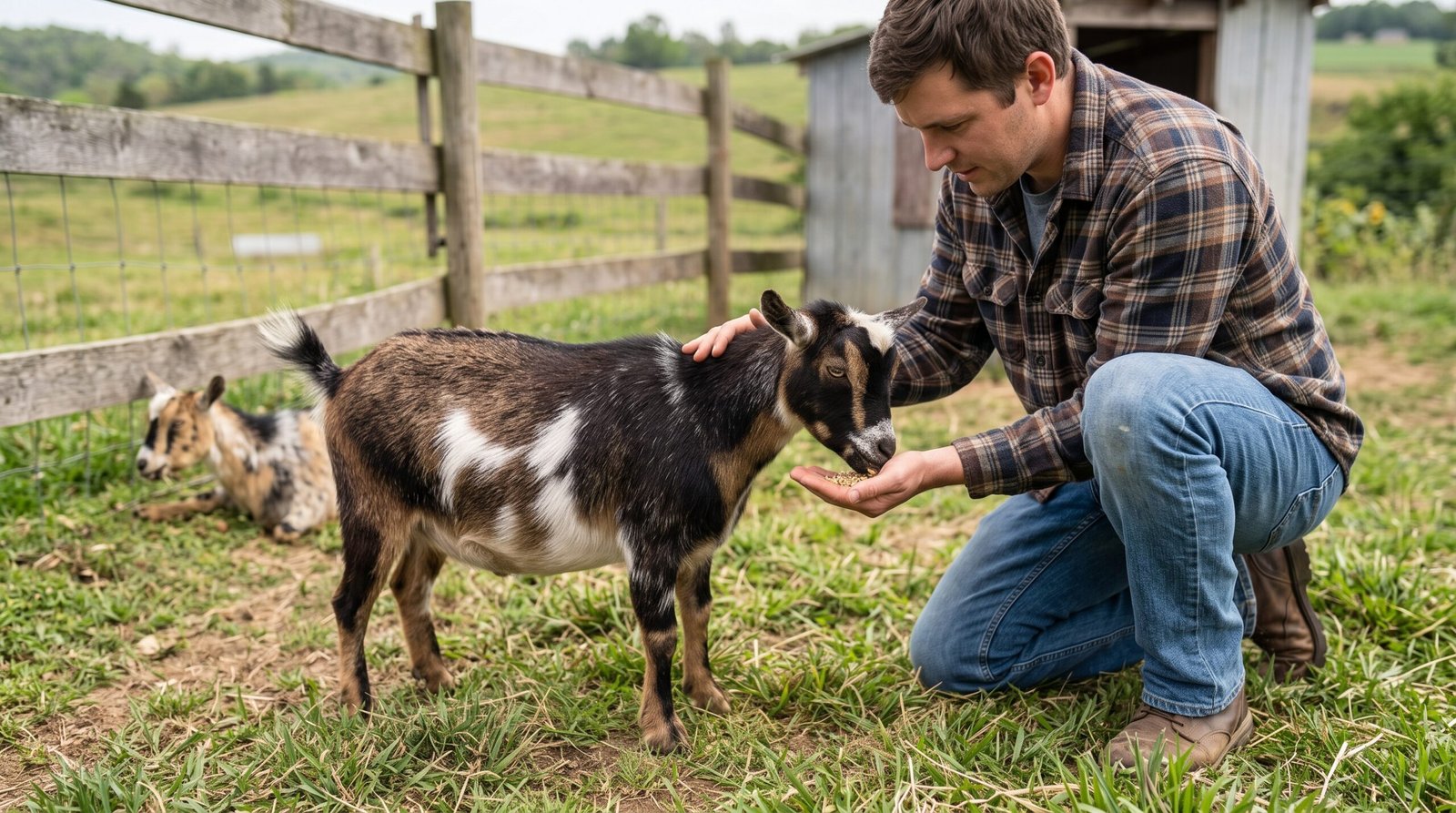
These goats are curious, food motivated, and genuinely enjoy human interaction once they’re used to regular handling. That same curiosity makes them talented escape artists, so don’t assume a calm temperament means low maintenance when it comes to containment.
Social Behavior and Herd Needs
Goats are strongly herd oriented. Never keep one as a solitary pet. A single goat left alone gets noticeably stressed, so plan on bringing home at least two from the start.
Breeding Considerations and Safety
Thinking about breeding this cross yourself? There’s a real safety issue here that gets skipped in most general small goat content. Worth taking seriously before pairing any two animals.
The Safer Breeding Direction
Pygmy kids are typically born with larger bones and bigger heads relative to body size than Nigerian Dwarf kids. Breed a Nigerian Dwarf buck to a Pygmy doe, and delivery tends to go easier, since the doe’s frame is already built for a stockier kid. Breed a Pygmy buck to a smaller Nigerian Dwarf doe, and the risk goes up. A large-boned, Pygmy-type kid can be genuinely hard for a slender doe to deliver safely.
When to Involve a Vet
Any first-time breeding of this cross, especially in the riskier direction, is worth a call to your vet ahead of time. Knowing the sire and dam’s individual body types matters more here than it does with two purebred animals of a known standard.
Land, Diet, and Daily Care
Care needs mirror both parent breeds fairly closely. Neither Pygmy nor Nigerian Dwarf goats need much space compared to standard sized livestock, which makes this cross a genuinely practical option for smaller properties. Still, plan around the higher end of either parent breed’s requirements. Don’t assume the smallest possible footprint will always work.
Space Requirements
Most owners manage a small herd on a quarter acre or less, with pasture quality and supplemental feeding affecting how far that stretches. Fencing needs to be sturdy and well maintained. These goats are persistent climbers and escape artists no matter which parent breed they favor.
Feeding Requirements
Diet stays fairly manageable given the smaller size, though a milking doe has real additional needs.
- Hay and quality pasture should make up most of the daily diet.
- A goat-specific mineral supplement covers nutritional gaps forage alone won’t fill.
- Milking does need supplemental grain to support production.
- Fresh water should stay available at all times.
Routine Health Care
Preventive care stays consistent no matter the parentage. Annual checkups, core vaccinations, deworming, and hoof trimming every six to eight weeks keep most animals healthy well into their later years.
Lifespan and General Health
Both parent breeds are hardy, and the cross generally inherits that same resilience, which is a real draw for owners wanting a lower maintenance small goat. Health outcomes also tend to benefit from hybrid vigor, a natural advantage crossbred animals often carry over closely bred purebred lines. Consistent routine care still matters more than genetics alone.
How Long They Typically Live
With good care, this cross commonly lives 10 to 15 years, similar to both parent breeds individually. Diet, genetics, and consistent hoof and parasite care all shape an individual animal’s outcome.
Cost and What Affects It
Pricing works a bit differently for this cross than for a purebred animal, since registration isn’t part of the equation the way it is for a purebred Pygmy or Nigerian Dwarf. That doesn’t mean price is random though. Coloring, conformation, and intended use still shape what a breeder reasonably charges.
Typical Price Range
Since these animals can’t be registered, prices run lower than comparable purebred stock. Expect somewhere between $150 and $300, depending on age, coloring, and whether the animal’s intended as a pet or a future milker.
Key Cost Factors
- Coloring and eye color. Blue-eyed or unusually patterned animals often command a premium.
- Age and sex. Weanling kids are typically priced lower than proven does.
- Udder and teat conformation, which matters significantly if the animal is intended for milking.
- Local demand and how established the breeder is in your area.
Buying Tips and Where to Look
Since this cross isn’t standardized, buying one takes more care than buying a purebred animal with documented lineage. A little extra diligence upfront, especially around parentage and intended use, goes a long way toward avoiding a mismatch between what you expect and what you actually bring home.
What to Ask a Breeder
A few pointed questions will tell you more than photos ever will, especially with a cross like this one.
- Ask which parent breed contributed the sire and which contributed the dam. It affects both temperament and breeding safety down the line.
- Buying for milk? Ask to see or feel the doe’s udder and teat size. Pygmy genetics don’t always produce ideal dairy conformation.
- Ask what generation the animal is, F1 or later, and request photos of both parents if possible.
- Ask about vaccination history and any known health issues in the line.
Things to Watch Out For
Be cautious of sellers marketing the cross as rare or officially recognized. No such registry exists. Sellers who are upfront about the animal being a cross, and who understand the generation and parentage clearly, tend to be far more reliable overall.
Frequently Asked Questions
Is the Nigerian Pygmy goat a real breed?
No, it’s a cross between the Pygmy and Nigerian Dwarf goat breeds, not a standalone, officially recognized breed with its own registry.
How big does it get?
Adults typically stand 16 to 23 inches at the withers and weigh 40 to 85 pounds, with build varying based on which parent breed is more dominant.
Can I register or show this cross?
No, major goat registries don’t recognize this cross as a breed, so it can’t be shown in breed-specific show classes or most 4-H programs.
Is it safe to breed a Pygmy buck to a Nigerian Dwarf doe?
It carries more risk than the reverse pairing, since Pygmy kids tend to have larger heads and bones that can be difficult for a smaller Nigerian Dwarf doe to deliver safely.
How much does one cost?
Prices commonly range from $150 to $300, generally lower than purebred stock since these animals can’t be registered.
Do they need a companion?
Yes, all goats need companionship, and a single goat left alone gets noticeably stressed. At least two should be kept together.
Conclusion
The Nigerian Pygmy goat brings together the sturdiness of the Pygmy and the color and charm of the Nigerian Dwarf into one genuinely likable small goat, even without a formal breed standard behind it. Knowing what you’re actually buying, from generation and parentage to breeding safety, makes all the difference between a well-informed purchase and a confusing one.
Looking for a healthy Nigerian Pygmy goat for your own property? We work directly with breeders who are transparent about parentage and generation. Reach out and we’ll help you find the right animal for your setup.