Proven Kinder Goat Meat and Dairy Traits for Small Farms
At our farm, we often look at what a goat can actually do before deciding whether it belongs in the herd. The Kinder stands out because it can provide both milk and meat from the same animal. That makes it useful for farms that want both without managing two separate types of goats. The breed is also fairly compact, which can make everyday handling easier. Its size, production, and practical nature are a big part of its appeal.
This guide covers where the breed comes from, its size, milk and meat production, a common mix-up buyers should know about, temperament, cost, and daily care. By the end, you’ll have a better idea of why this breed isn’t the same as a mini-Nubian, even though the two can look similar.
Born From a Practical Problem in Washington State
This breed traces back to 1985 at Pat Showalter’s Zederkamm Farm in Snohomish, Washington. The breed started because of a problem that came up on the farm. Her Nubian buck died unexpectedly, but she still needed to breed her two Nubian does. Instead of taking them to another farm, she bred them with her registered Pygmy bucks.
One of the resulting does was named Liberty. She was smaller than a full-sized Nubian and easier to manage and feed. That first cross worked well enough to keep the breeding program going.
The success eventually led to planned breeding over several generations, and other breeders in the area also began working with the same combination. Today, the Kinder Goat Breeders Association trademarks and registers the breed.
How Big Does This Breed Get
Its size falls between its two parent breeds. That middle size was one of the reasons behind the original cross.
Adult Size Range
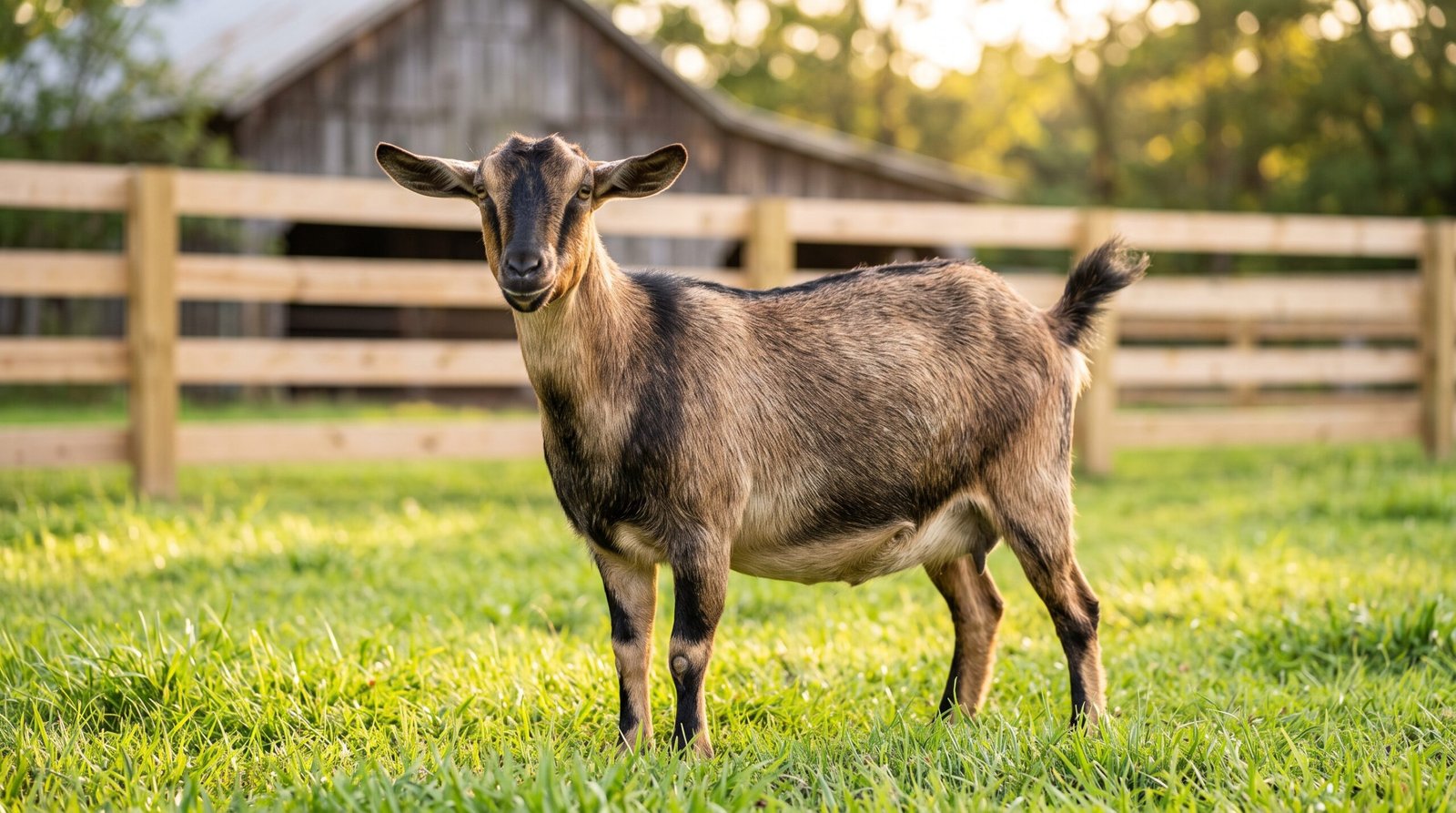
Height is measured at the withers once the goat reaches full maturity. Does usually stand 20 to 26 inches at the withers. Most weigh around 115 to 125 pounds, with an average height of roughly 23 to 25 inches.
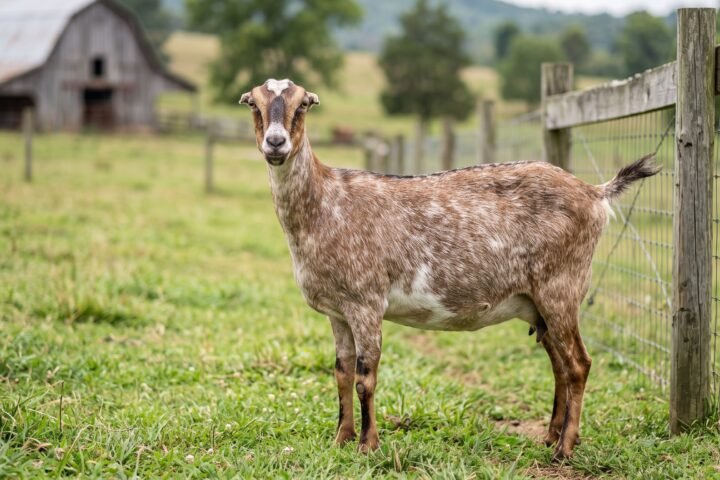
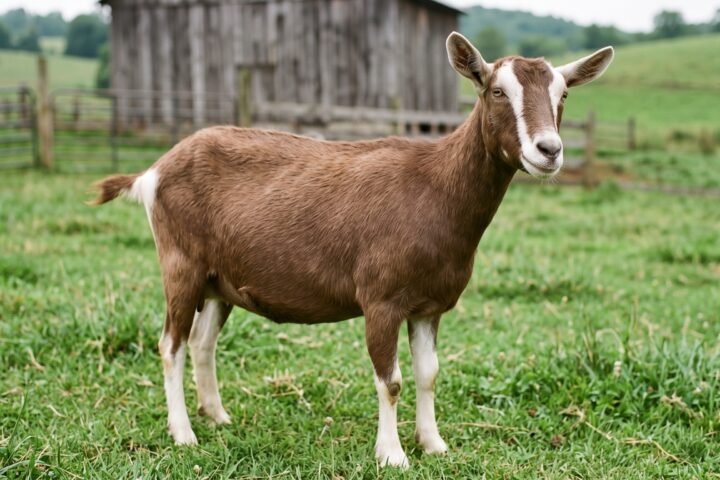
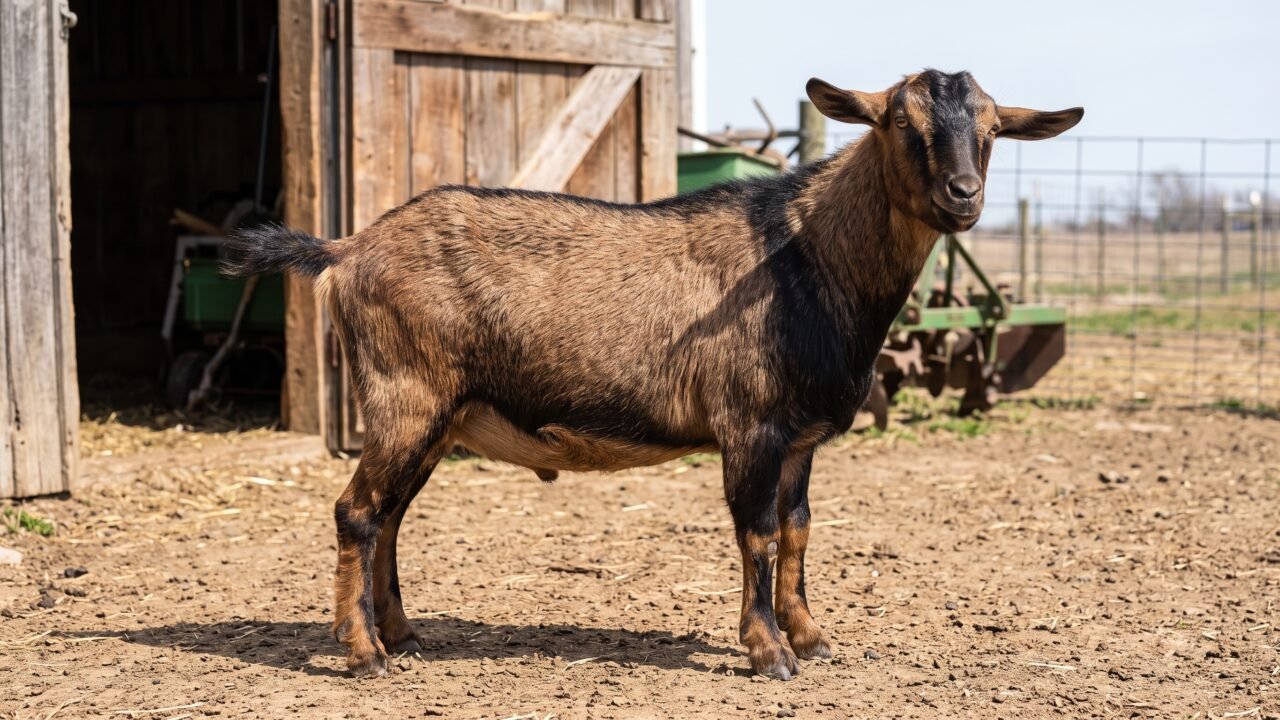
Bucks are a little larger. They generally stand 24 to 26 inches at the withers and weigh about 135 to 145 pounds. For such a compact goat, the build is quite stocky. These goats are heavily muscled and have more of a Pygmy-type body than the longer, leaner frame of a Nubian.
Kinder Goat vs Mini-Nubian: Why They Get Confused
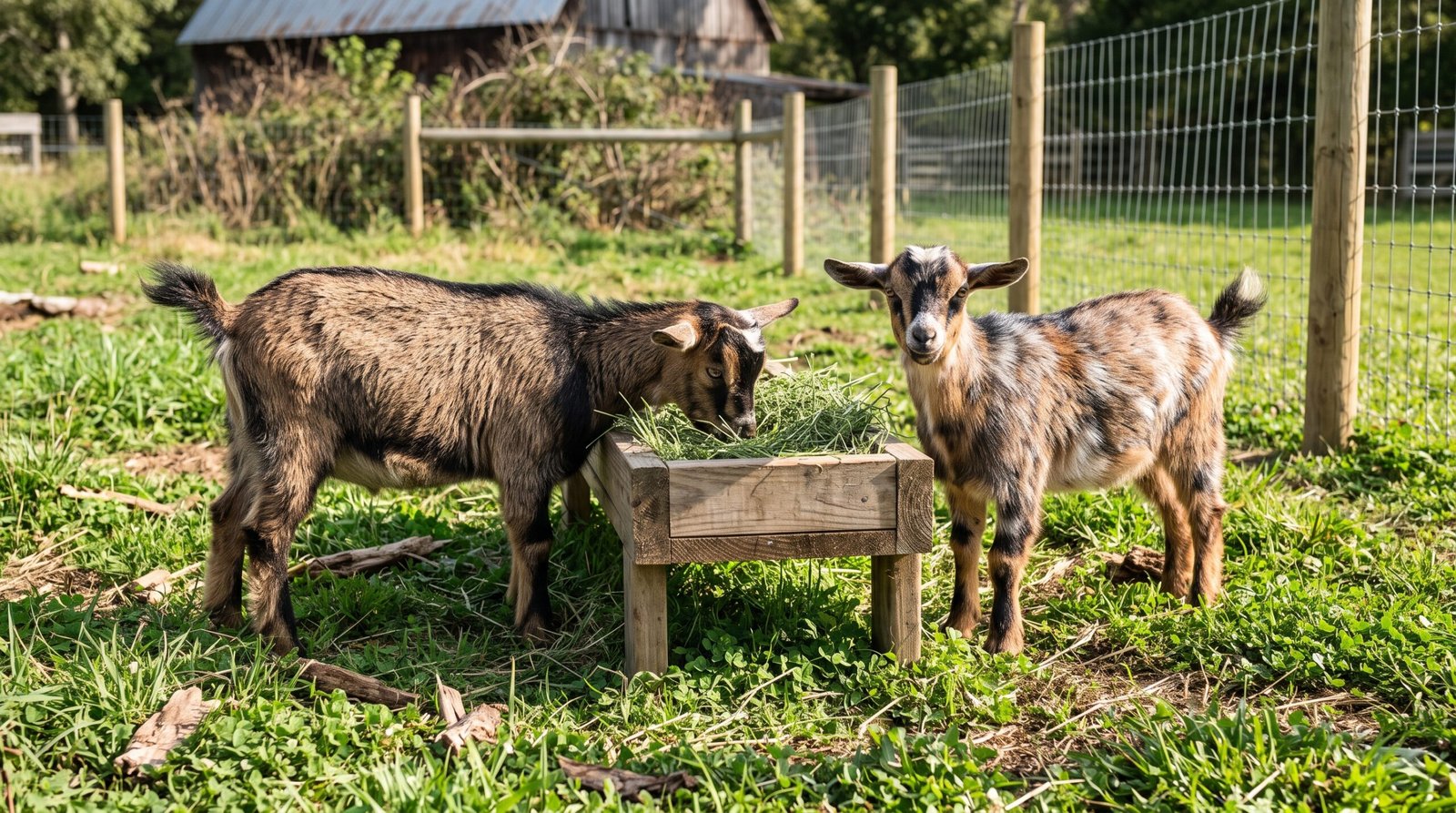
This is an easy mistake to make when looking at goats online. The two can have a similar compact appearance, colorful coats, and long airplane-style ears. Some sellers also use the names loosely. But the breeding behind these goats is different, and so are the original goals.
If you want to understand the dairy side of that difference more clearly, our complete Nigerian Dwarf goat guide explains the breed’s size, milk production, temperament, and everyday care.
The Real Difference
A mini-Nubian comes from breeding a Nigerian Dwarf with a Nubian. Since the Nigerian Dwarf is a miniature dairy breed, the focus is mainly on producing milk. This breed comes from a Pygmy and a Nubian instead. The Pygmy contributes meat qualities, while the Nubian brings strong dairy traits. The idea was to combine those qualities in one animal that could provide both milk and meat.
Why This Matters When You Buy
If you want a goat for both milk and meat, don’t assume a mini-Nubian and this breed will give you the same results just because they look alike. Ask the breeder exactly what breed you’re buying. The term “small Nubian-looking goat” can be used pretty loosely in casual listings, so checking the breeding information is important.
Milk Production and Quality
For a goat of this size, the amount of milk it can produce is one of its more interesting traits. This is also part of why the breed can work well for smaller farms. The Nubian side of the breed also helps explain its dairy qualities, and our complete Nubian goat guide takes a closer look at Nubian milk production, butterfat, size, and daily care.
Typical Milk Yield
Base production runs around 1,500 pounds of milk over a 305-day lactation or less. Tested does have produced anywhere from about 990 to 2,290 pounds annually, with the average sitting around 1,557 pounds. For a compact animal, that’s a useful amount of milk.
Milk Quality and Butterfat
The milk tends to be sweet and relatively high in butterfat compared with many other dairy breeds. That gives owners several ways to use it, including drinking, cheese making, and soap.
Meat Production and Growth
Milk is only part of what makes this breed useful. Meat production is another reason it was developed as a dual-purpose goat.
Growth Rate and Dress-Out
Kids usually weigh around 5 pounds at birth. From there, they gain roughly 0.3 to 0.4 pounds per day, or about 10 pounds a month. By their first birthday, they can reach around 70 percent of their adult weight. The dress-out percentage is around 60 percent, which is a useful figure for an animal bred to provide both meat and milk rather than being developed strictly as a meat breed.
Temperament and Everyday Behavior
This breed has a reputation for being easygoing and manageable. That can make daily handling easier for families and people managing a small herd on their own.
A Friendly, Manageable Breed
These goats are alert and people-oriented. They are generally considered manageable even for someone handling a herd without extra help or specialized equipment. Their compact and stocky build can also make them less likely to jump fences than some taller, leaner breeds.
Social Behavior and Herd Needs
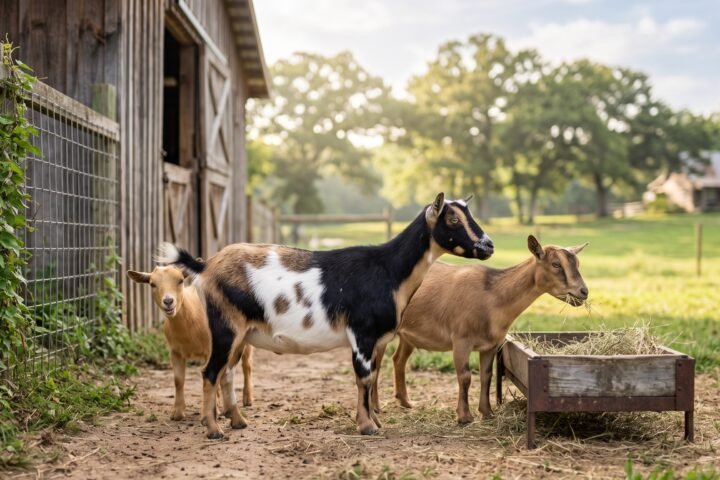
Like other goats, these animals are herd oriented. They should not be kept alone. A goat without a companion can become noticeably stressed. If you’re bringing goats home, plan to keep at least two together from the beginning.
Land, Diet, and Daily Care
One thing we like about this breed is how manageable its care can be compared with larger dairy or meat breeds. Its smaller frame also means it can work well on smaller properties. Good daily management should also include basic disease-prevention practices, and the USDA’s sheep and goat biosecurity guidance explains practical ways to reduce the risk of disease entering or spreading through a herd.
Space and Fencing
Their compact size and lower tendency to jump can make fencing a little easier to manage. Still, good fencing is important for keeping goats contained and protecting them from predators. A quarter acre or so per animal works well for many small herds.
Feeding Requirements
The breed is fairly efficient at turning feed into growth and production for its size. A good daily diet should include:
- Quality pasture and hay.
- Supplemental grain for milking does, to help support steady milk production.
- A goat-specific mineral supplement to cover nutritional gaps that forage alone may not provide.
- Fresh water, always available, especially for does that are producing milk.
Routine Health Care
Preventive care is much the same as it is for other goat breeds. Annual checkups, core vaccinations, deworming, and regular hoof trimming help keep the herd healthy. Hooves should generally be trimmed every six to eight weeks. With consistent care, many of these goats stay healthy well into their later years.
Breeding Cycle and Generation Requirements
If you’re buying a goat for breeding, there is an important detail to understand before you make a purchase.
A Year-Round Breeding Cycle
Unlike some breeds that are strongly seasonal breeders, this breed can generally be bred throughout the year. That gives owners more flexibility when planning kidding, since you can work the breeding schedule around your farm instead of being limited to one short breeding season.
How Registration Actually Works
You can start a breeding program by crossing a registered Pygmy buck with a registered purebred Nubian doe. However, the Kinder Goat Breeders Association requires selective breeding over several generations, generally through the fifth generation, before offspring qualify as fully registered members of the breed.
That means a first-generation cross is not automatically the same as a fully registered animal. When buying breeding stock, always ask about the animal’s generation and registration status.
The Factors Behind Cost
Prices for this breed can vary based on its purpose, breeding, registration, and local demand.
Typical Price Range
An unregistered kid or wether commonly costs around $150 to $350. Quality kids in the 40- to 80-pound range can sometimes bring prices similar to those of dedicated meat breeds. Registered breeding stock with documented generation status usually costs more, often around $300 to $600 or more.
Key Cost Factors
Several things can affect what you’ll pay:
- Registration status and confirmed generation can make a major difference.
- A doe’s milk production history matters if you’re buying her for dairy use.
- Meat conformation and growth rate can affect the value of an animal intended for meat production.
- Local demand and the breeder’s reputation in your area can also influence the price.
Buying Tips and Where to Look
Finding one can be easier than finding some less-established crosses because the breed has an established breeders association and is represented at some goat shows. Still, don’t rely on photos alone when you’re shopping for one.
Questions Worth Asking a Breeder
A few simple questions can tell you a lot about the animal you’re considering.
- Confirm that the animal is genuinely the breed advertised, and not a mini-Nubian or another similar-looking cross.
- Ask about its generation and whether it is fully registered.
- Ask for the documented height and weight of both parents.
- If you’re buying a doe for dairy use, ask about her milk production history.
- Visit the farm in person when it is practical before making a commitment.
Things to Watch Out For
Be careful with listings that use “Kinder” as a general term for any small, stocky, Nubian-looking goat. Ask the seller to explain the animal’s breeding, generation, and registration status. A breeder who is open about those details gives you a much clearer picture of what you’re buying.
Frequently Asked Questions
How much does it cost?
Unregistered kids or wethers typically cost $150 to $350. Registered breeding stock with confirmed generation status often costs $300 to $600 or more.
How big does it get?
Does typically stand 20 to 26 inches at the withers and weigh 115 to 125 pounds. Bucks are slightly larger and usually weigh 135 to 145 pounds.
Is it the same as a mini-Nubian?
No. A mini-Nubian is bred from Nigerian Dwarf and Nubian lines with a focus on milk. This breed comes from Pygmy and Nubian lines and was developed for both milk and meat production.
How much milk does it produce?
Base production is around 1,500 pounds over a 305-day lactation. Tested does have produced as much as 2,290 pounds annually.
Is it good for meat production?
Yes. Kids can reach about 70 percent of their adult weight by one year, and the dress-out percentage is around 60 percent. That makes the breed a practical option for both meat and milk.
Do they need a companion?
Yes. Goats are social herd animals, and a goat kept alone can become noticeably stressed. Keeping at least two together is recommended.
Conclusion
The Kinder goat offers a useful combination of milk and meat in a compact package. Instead of focusing heavily on just one purpose, this breed was developed to do both. Its sweet, higher-butterfat milk, solid meat qualities, and manageable size can make it a practical choice for smaller farms, and its generally easygoing temperament is another benefit for owners who handle their own goats.
Just make sure you know what you’re buying. A small goat that looks like a Nubian isn’t automatically this breed. Check the breeding, generation, and registration details before you commit. If you’re looking for a healthy, well-documented animal for your property, we work directly with verified breeders and can help you find one that fits your setup.
Reach out to us, and we’ll walk you through the available options from start to finish.