Key takeaways
- Half an acre per mini Highland cow is the floor, and only on good pasture. One to two acres is the safer plan if your grass is average or your summers run dry.
- Never plan for one. Cattle are herd animals, so budget acreage for a pair.
- Fence about 48 inches tall with woven wire or high-tensile wire, plus an electric strand. Cheap fencing is the most expensive mistake new owners make.
- Shelter means a three-sided shed, at least 30 square feet per animal, facing away from the wind.
- Water and hay logistics matter as much as the acreage number.
- Under half an acre? Look at mini goats instead.
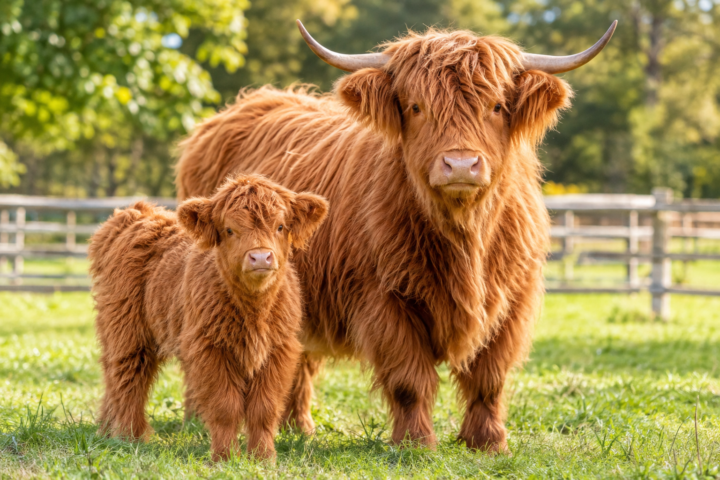
Stocking rate is the number of animals a piece of land can feed without wearing out, and for mini Highland cows it’s the first number every new owner wants. So, how much land do mini Highland cows need? Half an acre per cow works on good grass. One to two acres is where most people end up happy.
Minis stand under 42 inches at the hip as adults, so it’s tempting to think they need almost no room. They don’t need much, but they still eat like cattle, they still turn a wet corner into soup, and they still lean on fences.
This guide goes through acreage first, then fencing, then shelter, then how to lay it all out on one to five acres. It’s the same ground we cover with families who reach out before their calf even arrives.
How much land do mini Highland cows need?
Plan on about half an acre per mini Highland cow on good, well-managed pasture, and one to two acres where the soil is thin, rainfall is low or you want to cut your hay bill. Keep at least two animals, so a pair needs roughly one to two acres.
Here’s how it usually breaks down:
| Pasture quality | Per cow | For a pair | What it looks like |
| Lush and well managed | About 0.5 acre | About 1 acre | Thick grass most of the year, little hay in summer |
| Average | 0.75 to 1 acre | 1.5 to 2 acres | Hay needed in winter and late summer |
| Poor, dry, shaded or hilly | 1 to 2+ acres | 2 to 4+ acres | Hay for much of the year |
Those ranges blend what breeders and ranch guides commonly publish, including our own rule of thumb of about half an acre per mini cow. Your county extension office can tell you what your soil really grows, and that local number beats any chart.
Quick maths helps put it in perspective. An adult mini Highland is often put somewhere around 500 to 900 pounds, so call it 700. A common rule of thumb is about 2% of body weight in hay a day, which is 14 pounds. Over a year that’s roughly 5,100 pounds, a little over 2.5 tons, if hay were the only feed. Grass cuts that bill, but only while it’s growing.
The cost of that hay is part of the bigger picture. Our breakdown of how much a mini Highland cow costs covers the buying price, and your acreage decides how much hay you’ll add on top.
What decides how much pasture your minis really need?
Four things decide it: how fast your grass grows, how long your growing season lasts, how many months you feed hay, and how well you rotate paddocks. Good grass in a wet climate can carry a cow on half an acre. Dry or shady ground may need two.
Grass speed is the big one. A farm in a wet, mild region grows grass for most of the year. A farm with a dry summer or a frozen winter loses months of grazing, and every lost month turns into hay in the barn.
Rotation is the lever you control. Letting cows roam one big field means they eat the best patches of dirt and ignore the rest. Splitting the field with electric wire gives the grass time to recover, and Virginia Tech Extension points out that high-tensile electric is a relatively cheap way to divide pasture into paddocks.
Then there’s water. A mini Highland commonly drinks 5 to 10 gallons a day, more in summer heat. The same extension guidance suggests beef cattle should be no more than about 1,000 feet from water, or the far corners of the pasture go unused.
And don’t forget the shade. If a hot afternoon has your cows standing under the only tree, that tree’s ground will be bare by August.
Can you keep mini Highland cows on a small property?
Yes, but with a catch. Under an acre, a pair of minis can live fine if you feed hay most of the year and keep a dry lot, because the grass will be gone fast. Below half an acre, mini goats are usually the kinder fit.
The upside of a small place is simple. Two minis eat less than one full-size cow, they’re gentle to handle, and a well-fenced acre can hold them. The downside is mud and bare ground. Cows on a small plot trample the same paths again and again, and a wet spring can turn a corner of your yard into a mess.
Before you fall for a calf, check your zoning. Some counties and HOAs set a minimum acreage for cattle, or don’t allow them at all. A quick call to the county planning office beats an unhappy surprise later.
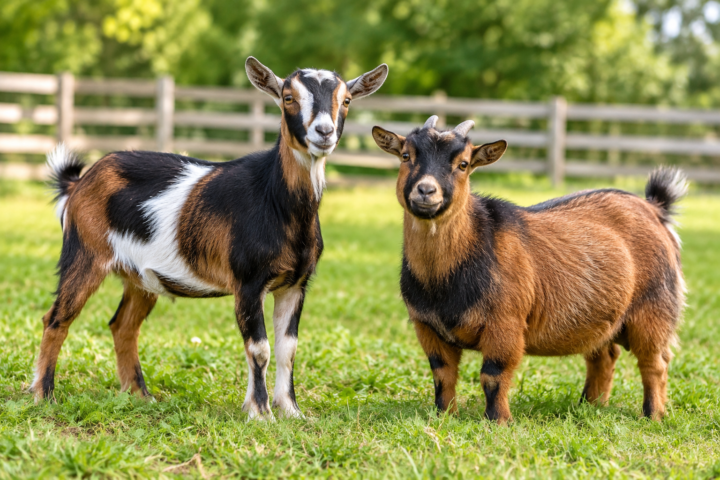
If you’re under half an acre, here’s our honest take. Mini goats are usually the better match. They need far less room, and our guide to Nigerian Dwarf vs Pygmy goats helps you pick the right one. We’d rather you start with the animal your land can really carry.
What kind of fencing do mini Highland cows need?
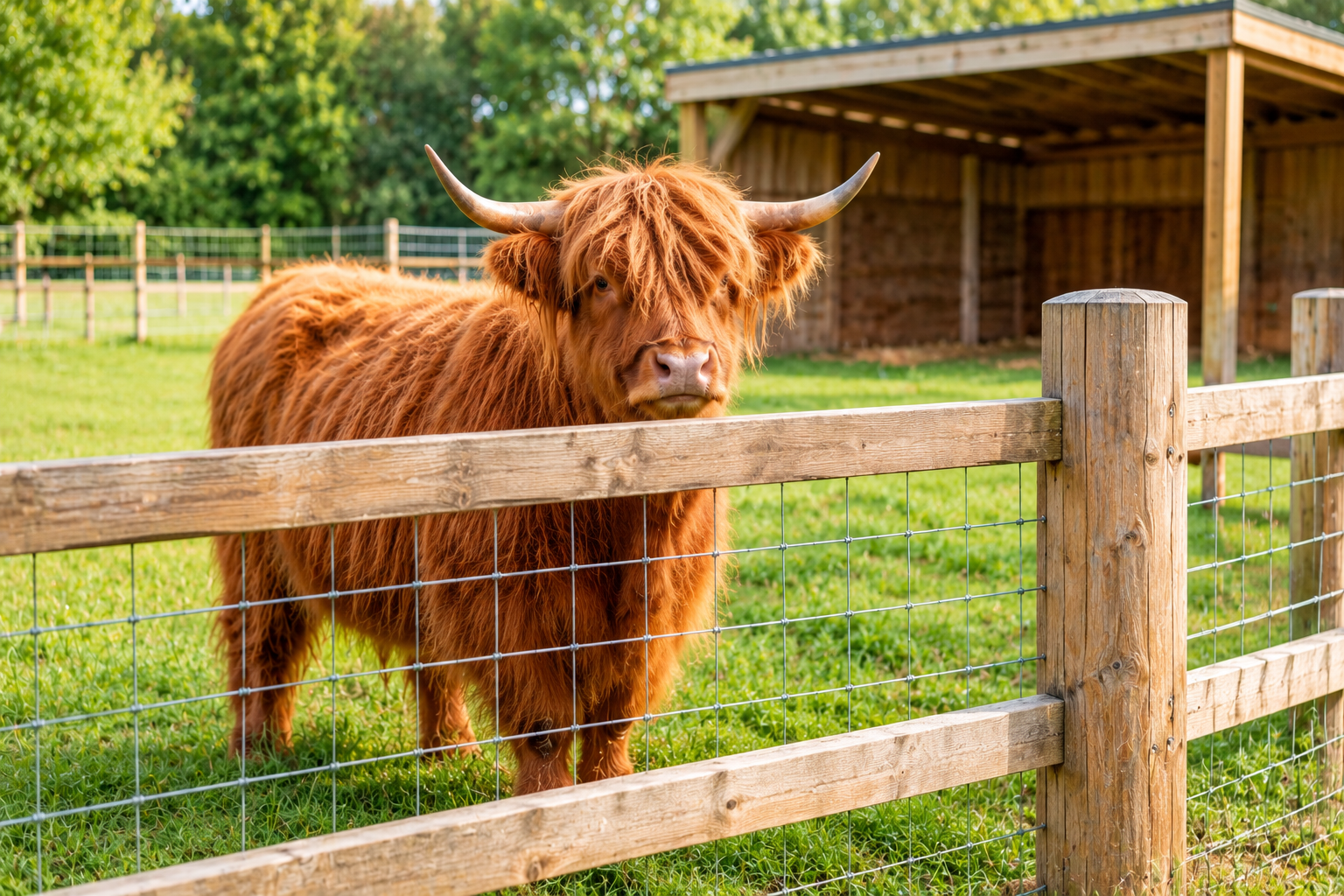
Use a strong perimeter of woven wire or multi-strand high-tensile wire, with at least one electric strand, about 48 inches tall overall. Brace the corners, set posts roughly 10 feet apart, and train the cows to respect the wire before you rely on it. Mid-size animals need taller fencing.
Where does 48 inches come from? Fencing guidance for full-size beef cattle often runs 54 inches. Michigan State Extension has listed woven wire at least 42 inches high with an extra strand above it, and minis stand under 42 inches at the hip, so about 48 inches overall suits them well. If you keep mid-size animals, go taller.
For the perimeter, Virginia Tech Extension recommends a strong permanent fence of woven wire or multiple-wire high-tensile, and says one to three electric wires are usually enough inside the farm for cattle. Electric works because it’s a psychological barrier, not a physical one. That means a cow has to feel it once to respect it, so introduce the wire in a small pen first. Aim for a charger that delivers at least 2,000 volts, and don’t skimp on grounding.
A few more details that save headaches:
- Check the mesh opening. Horns can get caught in tight woven wire, so ask your fencing supplier about horned cattle.
- Make at least one gate 12 feet wide, so a truck, tractor or hay bale can come through.
- Brace the corners well. Posts at the ends take most of the strain.
If you also keep mini goats, remember they need a tighter fence than cows. A fence that holds a mini Highland won’t hold a Nigerian Dwarf.
What kind of shelter do mini Highland cows need?
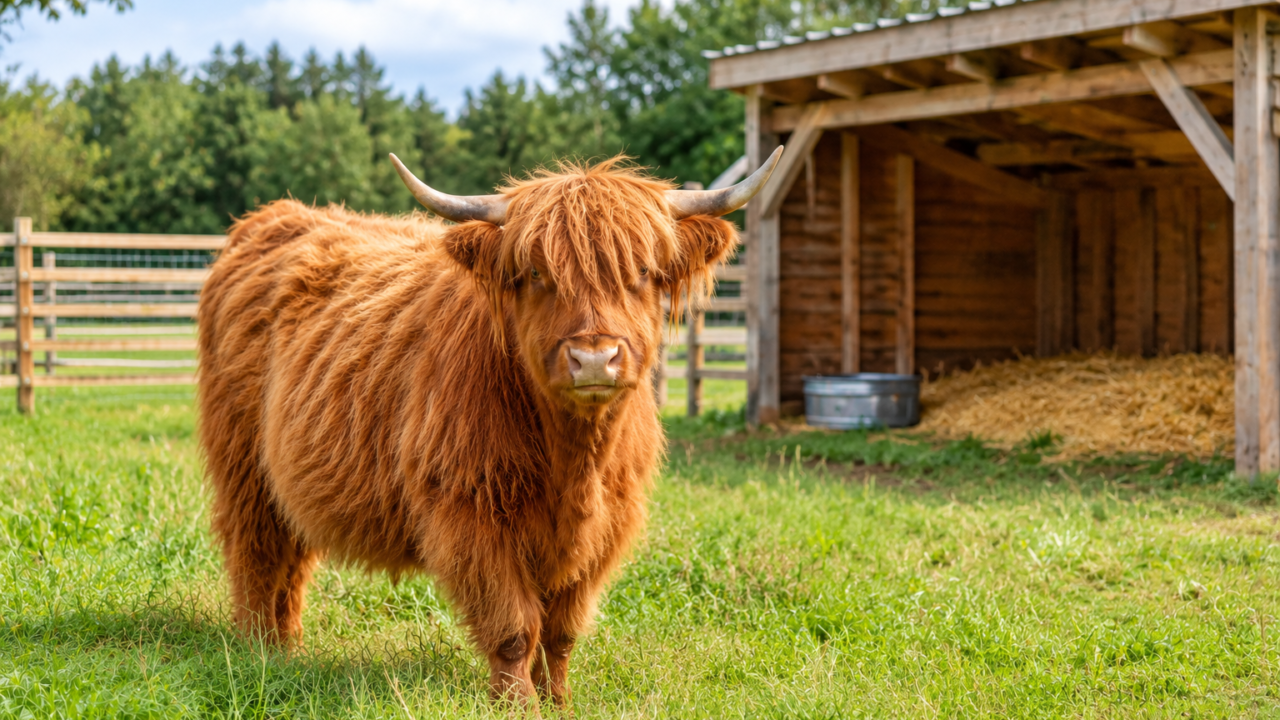
A three-sided run-in shed facing away from your prevailing wind, with at least 30 square feet per animal and a roof around 10 feet high. That’s the USDA NRCS minimum for beef cows, so it’s generous for minis. Add dry bedding and open airflow so the shed doesn’t trap summer heat.
The NRCS livestock shelter standard lists 30 square feet per head for beef cows, with a 10-foot height. For two minis, an 8 by 10 foot shed gives you 80 square feet, or 40 each. That leaves room to lie down without a fight, which matters when one cow is bossy.
Highlands have a thick double coat and tend to handle cold far better than heat. What hurts them is wind, soaking rain and hot, still air. So the shed needs a wall against the weather and open sides for airflow, and in southern states, shade often matters more than walls.
If a cow is going to calve, plan for more space. Extension specialists suggest two to four times the room for a cow with a calf, plus a spot the calf can get away from the herd.
The shed doesn’t need to be fancy. It does need to stay dry inside, so build it on high ground and keep the floor bedded.
How do you lay out one to two acres for a pair?
Put the shed, water and gate near each other on the highest, driest ground, then split the rest of the pasture into two to four paddocks with electric wire. Keep a small dry lot beside the shed for wet weeks. Rotate every week or two, depending on how fast the grass grows.
On two acres, it looks something like this:
- Choose the high corner by the gate for the shed, the water trough and a small dry lot. You’ll visit this spot every day, and it will be the muddiest, so keep it on solid ground.
- Divide the rest into three or four paddocks with one or two strands of electric wire.
- Graze one paddock at a time. When the grass is down to a few inches, move the cows and let it rest.
- Keep one paddock closed for hay or rest if the grass grows slowly.
- On one acre, use two paddocks and feed more hay. On five acres, you’ve got room for a hay patch or a few extra animals, as long as the grass can support them.
A tape measure and a 10-minute walk beat guessing. Pace out your fence line before you commit.
What are the most common land and fencing mistakes and myths?
- “They’re mini, so they need no land.” They need less, not none. They still graze, drink and trample.
- “Half an acre means half an acre of lush grass all year.” Only in the best conditions. Most places need hay for part of the year.
- “One cow is plenty.” Cattle are herd animals. A single cow often gets stressed and loud.
- “A goat fence will do.” Goat fencing is built for escape artists, but cows lean and push. Build for the animal you’ve got.
- “Electric wire alone is enough.” Only if the cows have been trained to it and the charger is strong and well grounded.
- “Shelter is optional.” Cold isn’t the issue. Wind, rain and heat are, and a shed fixes all three.
- “Mud is just mud.” Heavy mud means hoof problems and bare ground. Fix drainage early.
Quick reference numbers
| Metric | Typical figure | What it means for you |
| Adult height at the hip | Under 42 in | Smaller than a standard Highland, but still cattle |
| Land per mini cow | 0.5 acre on good pasture, 1 to 2 acres on poor | Plan for the poor end if you’re unsure |
| Minimum herd | 2 animals | Budget acreage for a pair |
| Hay per day, 700 lb mini | About 14 lb (2% of body weight) | Roughly 2.5 tons a year if hay were the only feed |
| Water per day | 5 to 10 gallons | More in summer heat |
| Shelter per animal | 30 sq ft minimum | An 8 by 10 ft shed suits two minis |
| Fence height | About 48 in overall | Woven wire at least 42 in plus a top strand |
| Electric charger | At least 2,000 volts | Ground it well and train the cows |
| Distance to water | Within about 1,000 ft | Keeps the whole pasture in use |
FAQs
How many acres do you need for two mini Highland cows?
One to two acres is a safe plan for a pair, depending on pasture quality. Half an acre each works on lush, well-managed grass. Poor or dry ground may need more, plus hay for much of the year.
Can mini Highland cows live on 1 acre?
Yes, a pair can live on one good acre if you rotate paddocks and feed hay when the grass is short. Expect some bare ground and mud, and keep a dry lot for wet weather.
Do mini Highland cows need a barn?
Not a full barn. A three-sided run-in shed is enough for most climates, as long as it blocks wind and rain, stays dry and has airflow in summer. Calving may call for a little extra space.
What is the best fence for mini Highland cows?
Woven wire or multi-strand high-tensile wire with an electric strand, about 48 inches tall. Brace the corners well, check mesh size for horns and train the cows to the electric wire.
Can mini Highland cows live with goats?
Often yes, they can share a pasture, but the fencing has to hold the goats, which is tighter than cow fencing. Watch feed too, because goats and cattle have different mineral needs.
How long do mini Highland cows live?
Most live 15 to 20 years, so the land and fencing you build now will serve you for a long time. Our guide to how long mini Highland cows live covers the details.