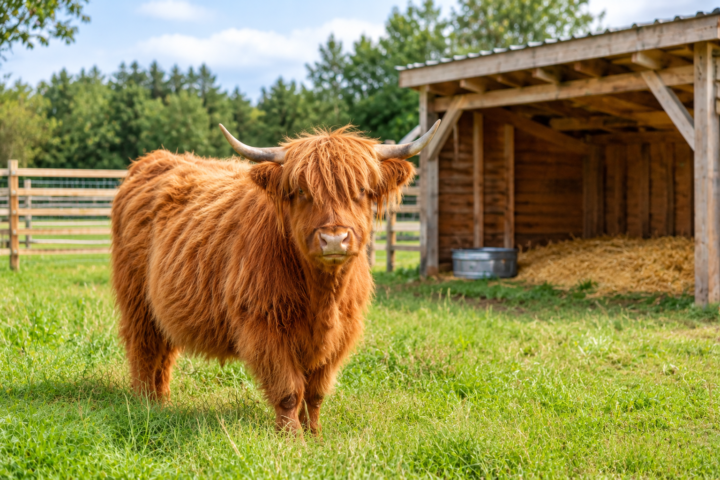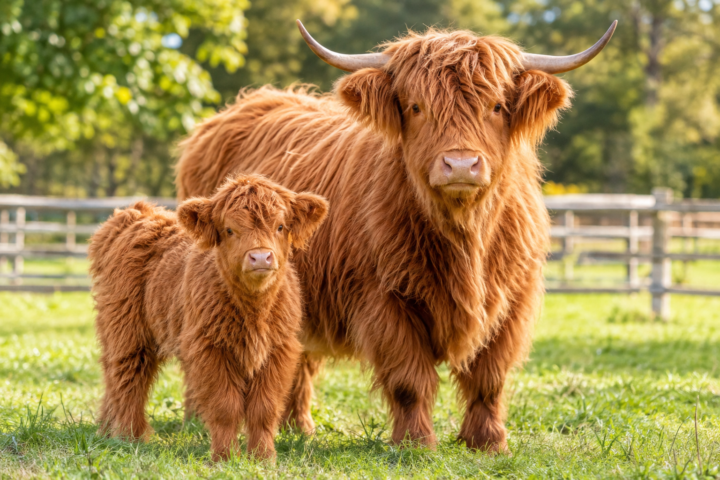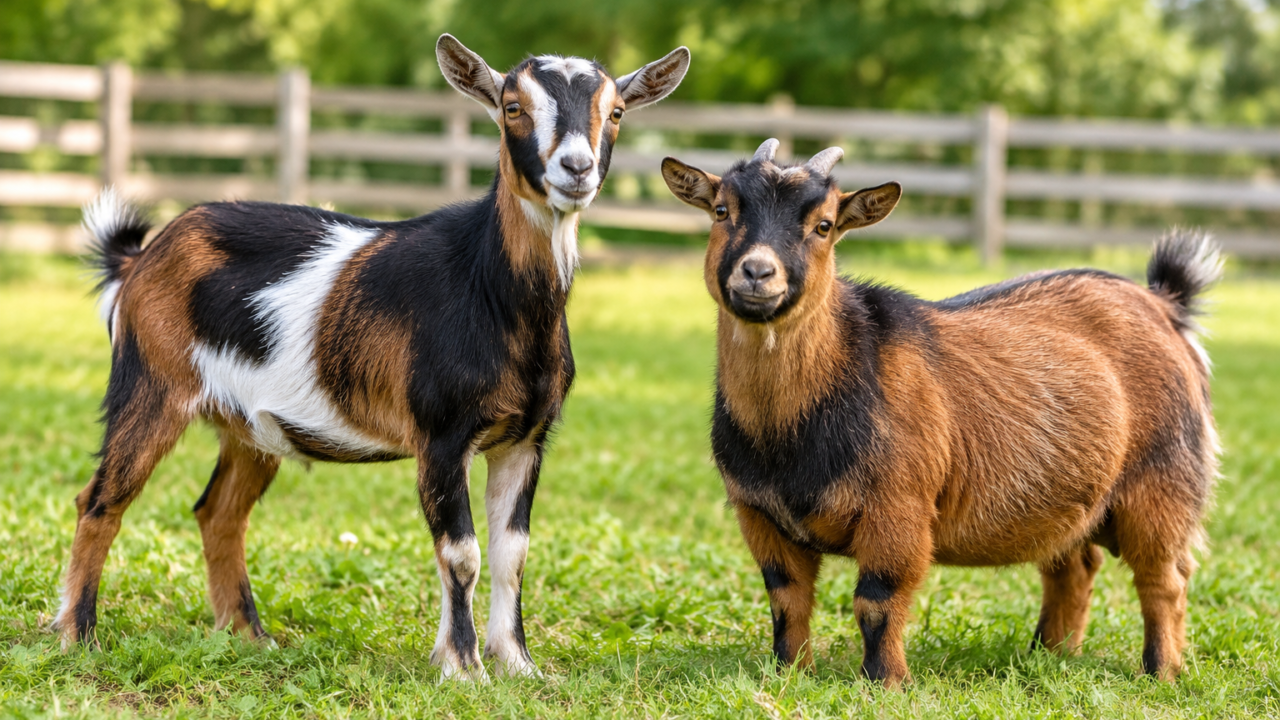
A Nigerian Dwarf is a small, dairy-bred goat built for milk and energy. A Pygmy is a stocky, cobby goat that started out as a West African meat animal and now thrives as a pet. That’s the short version of the Nigerian Dwarf vs Pygmy goat question, and the rest of this post helps you decide which one fits your yard, your family and your patience.
Key Takeaways
- Pick a Nigerian Dwarf if you want milk, a livelier goat and a slimmer build.
- Pick a Pygmy if you want a calm, sturdy, funny pet and milk isn’t the goal.
- Both stay under about 23 inches, live 10 to 15 years and need at least one goat friend.
- Nigerian Dwarfs are usually louder and better at escaping. Pygmies gain weight easily.
- Neither is a bad first goat. The wrong choice is usually the one that doesn’t match your reason for buying.
What’s the real difference between a Nigerian Dwarf and a Pygmy goat?
Nigerian Dwarfs are slim, refined dairy goats bred for milk. Pygmies are stocky, thick-boned goats that began as meat animals in West Africa and now mostly live as pets. Both stay small, but Nigerian Dwarfs are leggier, livelier and milk-focused, while Pygmies are rounder, heavier-set and more laid-back.
You can usually tell them apart from across the pasture. A Nigerian Dwarf looks like a standard dairy goat shrunk down: angular, fine-boned, with a straight back and a neat udder on does. A Pygmy looks like it’s wearing a winter coat all year, with a deep barrel body, short legs and a wide chest.
Here’s the side-by-side.
| Nigerian Dwarf | Pygmy | |
| Original purpose | Dairy | Meat, then pet and exhibition |
| Build | Fine-boned, angular, leggier | Cobby, barrel-bodied, thick-boned |
| Height | Up to about 22.5 in (does), 23.5 in (bucks) | Roughly 16 to 23 in |
| Adult weight | Roughly 50 to 80 lb | Roughly 50 to 80 lb |
| Milk | Strong, often 6%+ butterfat | Small amounts |
| Temperament | Curious, busy, social | Mellow, comical, a little stubborn |
| Noise level | Louder | Usually quieter |
| Lifespan | 10 to 15 years | 10 to 15 years |
Heights follow the breed standards published by the American Dairy Goat Association and the National Pygmy Goat Association. Weights vary by line, age and feeding.
Which one is smaller?
Pygmies are shorter but heavier-looking. Most stand 16 to 23 inches at the withers on a barrel-shaped frame. Nigerian Dwarfs top out around 22.5 inches for does and 23.5 for bucks, with a lighter, leggier build. Adult weight overlaps heavily, roughly 50 to 80 pounds for either breed.
In practice, the difference you’ll notice isn’t height. Its shape. A Pygmy feels solid when you lift or lead it. A Nigerian Dwarf feels lighter and quicker. If a small child will be handling the goat, that sturdiness can matter, but it also means a Pygmy that’s gained too much weight gets heavy fast.
Which gives more milk?
Nigerian Dwarfs, easily. They’re a recognized dairy breed, and typically give around one to two quarts a day of milk that often tests 6 percent butterfat or higher. Pygmies can be milked, but they give much less, and it isn’t what the breed was developed for.
That butterfat number is the reason Nigerian Dwarf milk tastes sweet and makes good cheese and soap. Most standard dairy breeds land closer to 3 or 4 percent. If you want a small, home-sized milk supply, a pair of Nigerian Dwarfs is a realistic setup. If you want milk by the gallon, neither breed is the answer (more on that below).
We list Does in Milk and registered ADGA/AGS goats on the available goats page when stock allows.
Which has the better temperament?
Both are friendly, social and good with kids. Pygmies tend to be mellow, comical and a little stubborn. Nigerian Dwarfs are busier, more curious and more likely to follow you around the pasture. Neither breed is aggressive when handled early, though bucks of both get pushy and smelly during rut.
The honest take: if you want a goat that sits next to you while you drink coffee, learn Pygmy. If you want a goat that’s inspecting your pockets, climbing the picnic table and inventing new jobs for itself, learn Nigerian Dwarf. Both bond hard with their people when they’ve been bottle-raised and handled daily, which is how we raise every kid at Hoof Miniatures.
Which is louder?
Nigerian Dwarfs are usually the louder of the two, especially in heat or any goat waiting for breakfast. Pygmies tend to be quieter, but every goat left alone will complain. Keeping two goats together cuts the noise a lot, which is one more reason never to keep a single goat.
If you have close neighbors, this one matters more than size. Check your local zoning or HOA rules before you buy, since some towns limit livestock even at mini scale.
How much do they cost?
Both are among the most affordable goats to buy. Current listings on our site run from $150 for wethers to $450 for registered, show-quality goats, with bonded pairs listed at $300. Papers, milk lines and age move the price more than the breed name does.
Prices change, so check the live listings before you plan a budget. For a full breakdown by goat type, read our guide on how much a mini goat costs. And remember the purchase price is the cheap part. Feed, hay, hoof trims, vaccines, minerals and fencing are the real long-term cost, and they’re nearly identical for both breeds.
We deliver across the USA, and every goat comes with a vet health check and our written health guarantee. You can request a quote and get a delivery figure within 24 hours.
Which is easier for beginners?
Both make good first goats. Plan on at least two animals, a dry three-sided shelter, a common guideline of about 200 square feet of outdoor space per goat, and sturdy four-foot fencing. Pygmies need closer watching for weight gain. Nigerian Dwarfs need better fencing, because they’re climbers and escape artists.
A starter checklist that works for either breed:
- Two goats minimum. They’re herd animals and get stressed alone.
- Fencing first. Buy the fence before the goat.
- Dry shelter. Goats hate rain more than cold.
- Good hay and loose minerals. Skip heavy grain, especially for wethers.
- A hoof-trimming routine. Roughly every 6 to 8 weeks.
- A vet nearby who sees goats, not just dogs and cats.
New to all this? Our How It Works page walks through the buying and delivery process, and we stay available for care questions after your goats arrive.
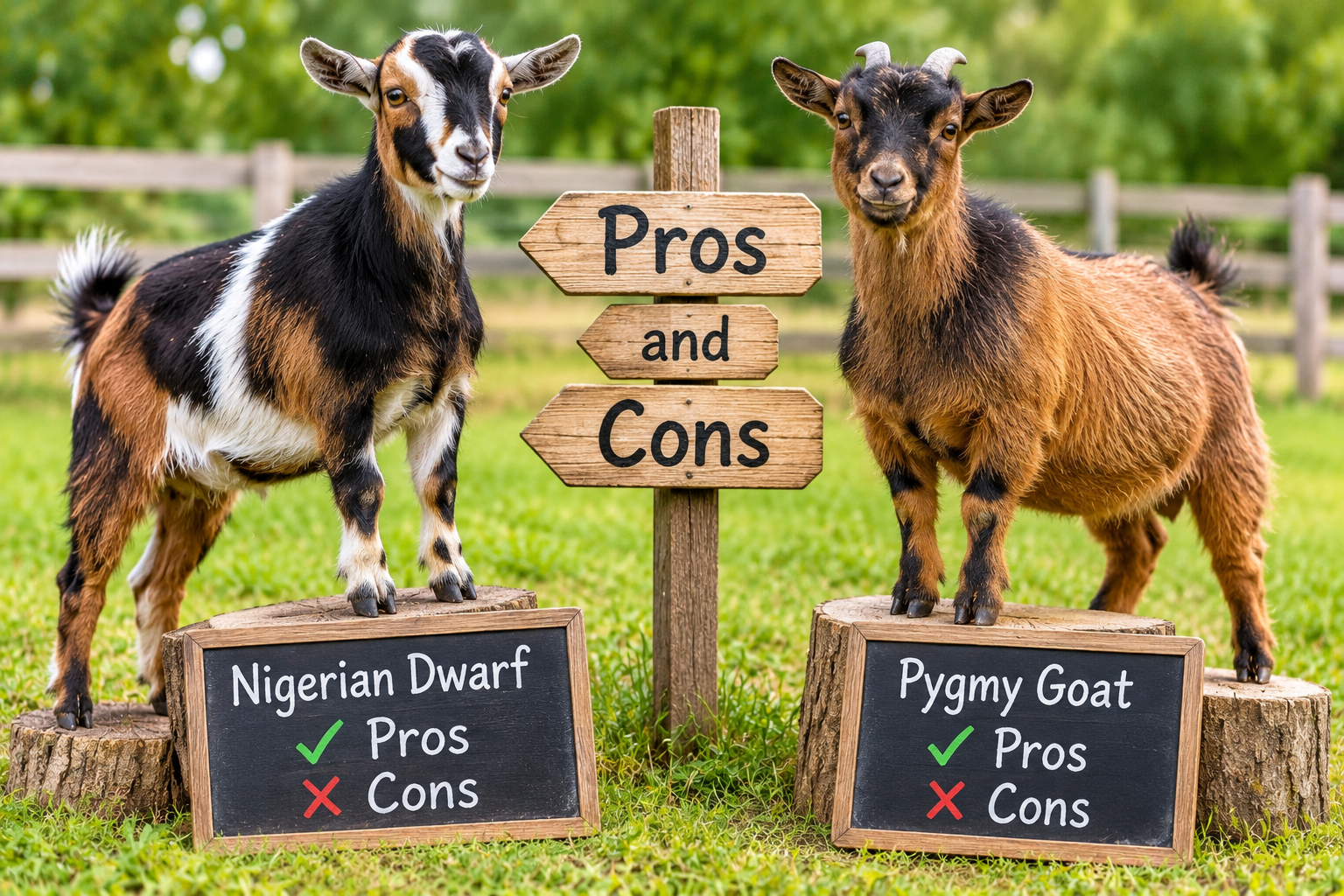
What are the honest pros and cons of each?
Nigerian Dwarf
- Pros: real milk production, sweet-tasting milk, lively personality, often registerable with ADGA.
- Cons: louder, more fence-testing, needs more activity and attention.
Pygmy
- Pros: calm, sturdy, quieter, funny, a great pet for kids and small yards.
- Cons: little milk, prone to getting overweight, can be stubborn about handling and hoof trims.
No breed wins on every line. The better goat is the one whose cons you can live with.
What are the common mistakes and myths?
- Myth: “They’re the same breed in different sizes.” They aren’t. They have different origins, builds and purposes.
- Mistake: buying one goat. One goat is a lonely, loud goat. Buy a pair, or a bonded pair.
- Myth: “Nigerian Pygmy” is a breed. Crosses sold under that name are common, but it isn’t a recognized breed. Ask about parentage. Our Nigerian Pygmy goat guide explains what you’re really getting.
- Mistake: skipping the fence upgrade. Nigerian Dwarfs in particular will test every gap.
- Mistake: feeding for cuteness. Round Pygmies aren’t healthy Pygmies. Treats and grain add up quickly.
- Myth: “Mini means no space needed.” Mini goats still need room to run, climb and browse.
When is another breed the better choice?
Sometimes neither of these two is right, and we’d rather tell you that than sell you the wrong goat.
- You want more milk per goat: look at a Mini Nubian. Rich milk, bigger volume, gentle nature. They’re loud, though. See our Nubian goat guide.
- You want fiber: a Pygora is a better fit than either. Read about the Pygora goat.
- You want meat in volume: a larger meat breed makes more sense than any mini goat.
- You want a quiet, no-fuss pet and don’t care about milk: a pair of wethers, in either breed, is hard to beat.
Quick stats you can quote
| Fact | Nigerian Dwarf | Pygmy |
| Height (breed standard) | Up to ~22.5 in does, ~23.5 in bucks | ~16 to 23 in |
| Typical lifespan | 10 to 15 years | 10 to 15 years |
| Milk butterfat | Often 6%+ | Not a milk breed |
| Minimum herd size | 2 | 2 |
So which one should you choose?
Run through these five questions and count your answers.
- Do you want milk? Yes → Nigerian Dwarf. No → either.
- Do you have close neighbors? Yes → lean Pygmy for the lower noise.
- Will young kids handle the goats daily? Yes → lean Pygmy for the sturdier, calmer build.
- Is your fencing weak or short? Yes → fix it first, or choose Pygmy.
- Do you want a goat with a big personality? Yes → Nigerian Dwarf. You want a chill companion → Pygmy.
Still split? Get one of each. They get along fine in the same herd, as long as you aren’t planning accidental crosses. Browse our mini goats, see what’s available, and tell us what you’re after. We’ll match you honestly.
FAQs
Can Nigerian Dwarf and Pygmy goats live together?
Yes. They share space, hay and shelter without trouble. Keep bucks separate from does unless you intend to breed, because crosses are common and unpredictable.
Which is better for kids, a Nigerian Dwarf or a Pygmy?
Both are gentle. Pygmies are sturdier and calmer, which suits younger children. Nigerian Dwarfs are more active and fun for older kids. Supervise any child with any animal.
Do Nigerian Dwarf goats smell?
The weather has little odor. Bucks in rut smell strong, and Pygmy bucks do too. Wethers are the low-smelling choice for pets.
How long do Nigerian Dwarf and Pygmy goats live?
With good care, both commonly live 10 to 15 years, so think of a goat as a long commitment.
Can you milk a Pygmy goat?
Yes, but expect small yields. If milk is the goal, a Nigerian Dwarf or Mini Nubian is the better pick.