Guide to the White Highland Cow Genetics and Everyday Care
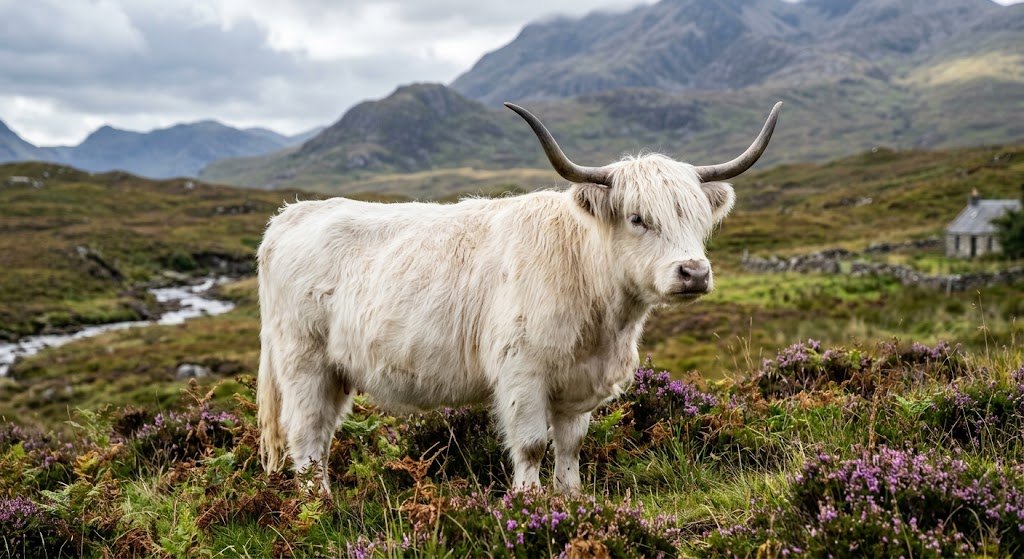
At our farm, the white Highland cow is one of the colors people ask us about quite often. The pale coat, long hair, and big Highland horns give these cattle a look that is hard to miss. White Highlands are also uncommon, so many people who ask about them have never seen one in person.
There is more to this color than just appearance, though. In this guide, we’ll look at what makes a Highland white, how the color genetics work, and how a true white compares with a silver animal. We’ll also cover breeding, care, pricing, and a few things worth checking before you buy one.
A White Highland Isn’t a Different Breed
A white Highland cow is not a separate breed. It is simply a Highland cow with a white or cream-colored coat. Everything else about the animal comes from the same Highland breed that has been raised for generations in Scotland and elsewhere.
You still get the familiar long hair, thick double coat, large horns, and fringe over the eyes. Their general temperament and hardiness are not changed by having a white coat either. The difference is mainly the color, and true white is one of the less common colors you’ll find in Highland cattle.
Highlands can also be red, black, yellow, dun, brindle, or silver. Some of those colors are much easier to find than a true white animal, which is one reason white Highlands get so much attention from buyers.
How the Color Genetics Actually Work
Highland color genetics can get confusing pretty quickly if you only look at the animal’s appearance. There are two separate parts involved. One set of genes determines the basic color, while another set affects how strongly that color gets diluted.
The base color is essentially built around red or black. Then the dilution gene can make that color appear lighter. With one copy of the dilution gene, black can become gray or silver, while red can become a much lighter shade.
When two copies of the dilution gene are inherited, one from each parent, the color can become much lighter again. This is where the very pale cream or white appearance can come from, regardless of whether the original base color was red or black.
That is also why looking at two parents and guessing the calf’s color isn’t always enough. The genes they carry can tell a different story from what you see on the outside.
True White vs Silver: How to Tell the Difference
This is where things can get confusing for buyers. Some Highlands look almost white in photographs but are actually silver or another very pale shade. Lighting can make the difference even harder to see when you’re looking at pictures online.
Breeders often look at the nose as one clue. A silver Highland with one dilution gene will generally have a gray nose. A true white Highland carrying two copies of the dilution gene will more often have a pinkish nose.
A white Highland should not be confused with an albino animal either. True white Highlands still have normal pigmentation in their eyes and skin. You may also notice darker areas around the ears, muzzle, or hooves.
The coat itself can change in appearance as the animal gets older. Season, age, and sunlight can all affect how light the hair looks. So a calf that appears almost snow white when young may not keep exactly the same shade throughout its life.
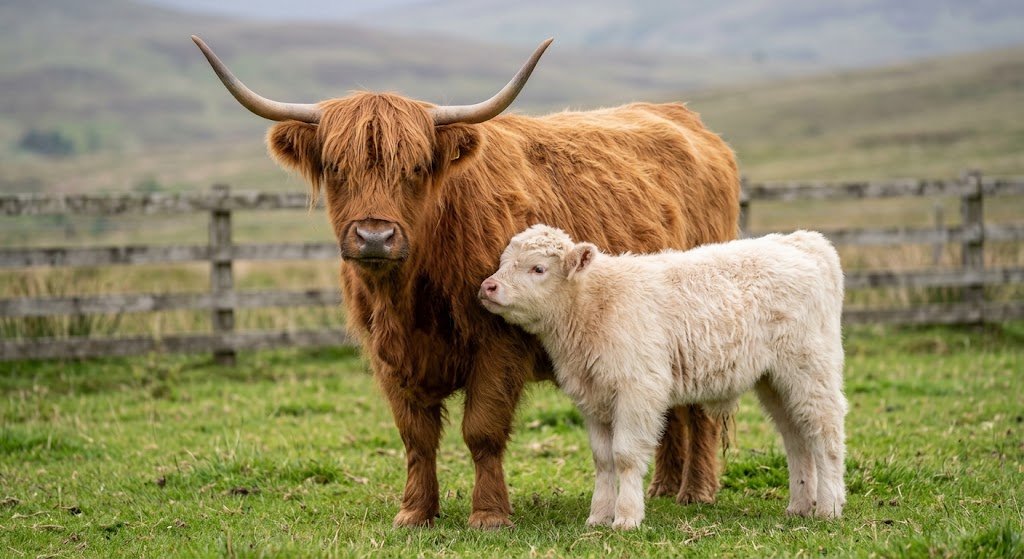
Why Breeding One Is Far Less Predictable Than You’d Think
This is one of the things that surprises people when they first start looking into white Highland genetics. If you want white calves, putting two white-looking animals together does not automatically make the result certain.
The reason is that base color and dilution are separate genetic traits. Each parent passes its own combination of genes to the calf, and the final result depends on that combination.
For example, a white cow bred with a red bull can produce calves in different shades. The same basic issue applies when two white parents are bred together. Their appearance doesn’t tell you every detail about the genes they carry.
For anyone breeding specifically for color, genetic testing can therefore be very useful. If someone says a particular mating is guaranteed to produce a white calf, I’d want to see the genetic information supporting that claim rather than relying on the parents’ appearance alone.
Why This Color Stays So Rare
There isn’t anything mysterious about the rarity of white Highlands. It comes down to the particular combination of genes needed to produce that very light coat.
The genes behind common Highland colors such as red and black occur more frequently. The combination needed for a true white coat is less common, so there are naturally fewer white animals available for breeding.
Then there is the buyer interest. A white Highland looks different from the colors people see most often, and that makes them attractive to many owners. When something is harder to find and people specifically want it, the price can go up as well.
Temperament and Everyday Care
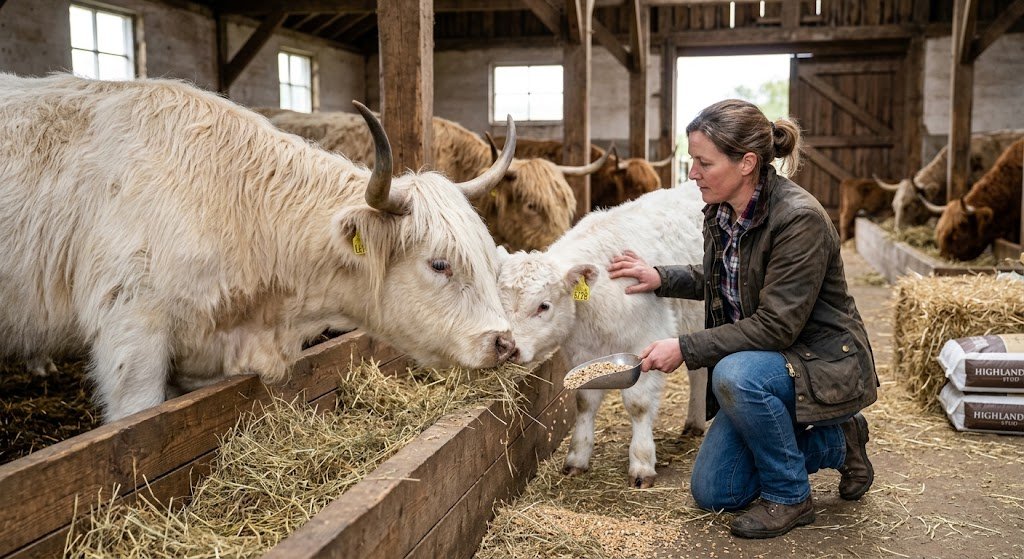
Having a white coat doesn’t change the basic care requirements of a Highland cow. A white Highland needs the same type of food, fencing, companionship, and general management as other Highlands.
- Highlands are herd animals, so keeping one completely alone isn’t a good setup. It’s better to plan for at least two cattle.
- Good pasture and quality forage should provide the main part of the diet. Highlands are well suited to rougher grazing areas.
- Strong fencing is needed, along with a suitable place where the cattle can get out of extreme weather.
- Routine health checks, vaccinations, parasite control, and hoof care should remain part of the normal care routine.
Cost and What Drives It
White Highlands will often cost more than red or black Highlands of similar age and quality. The main reason is that true white animals are harder to find, while their unusual appearance attracts plenty of buyer interest.
The animal’s registration and parentage can also affect the price. Age, sex, conformation, breeding history, and the quality of the bloodline all matter when comparing individual animals.
If breeding is part of your plan, I’d also ask about color genetic testing before making a purchase. A coat can tell you what the animal looks like, but testing can give you a much better idea of what color genes it actually carries.
Frequently Asked Questions
Is a white Highland cow a separate breed?
No. It is a regular Highland cow with a white or cream-colored coat. It isn’t a separate breed or a special Highland subtype.
How can I tell a true white Highland from a silver one?
The nose can give you a useful clue. Silver Highlands generally have a gray nose, while true white Highlands tend to have a more pink-colored nose. If color genetics are important for breeding, genetic testing is a more reliable option than appearance alone.
Is a white Highland an albino?
No. A true white Highland is not an albino animal. These cattle still have normal pigmentation in their eyes and skin, and some darker areas can be present around the body.
Can two white Highlands guarantee a white calf?
No. The parents’ appearance doesn’t guarantee the color of their calf. Since base color and dilution are inherited separately, different genetic combinations can produce different results.
Why are white Highlands more expensive?
White Highlands are less common than many other Highland colors, and their unusual appearance makes them popular with certain buyers. The combination of limited availability and demand can result in a higher price.
Conclusion
The white Highland cow is still a Highland cow, not a separate breed. What makes it different is the uncommon combination of genes responsible for its very pale coat. That color is part of what makes these animals so interesting, but it can also make breeding for white calves more complicated than it first appears.
If you’re planning to buy one, learn to look beyond the coat color. Knowing the difference between white and silver, checking the animal’s background, and asking about color genetics can save you from making assumptions based only on photographs or appearance.
If you’re looking for a healthy white Highland cow for your own property, we work directly with verified breeders and can help you find the right animal for your setup. Reach out to us and we’ll walk you through your options from start to finish.