
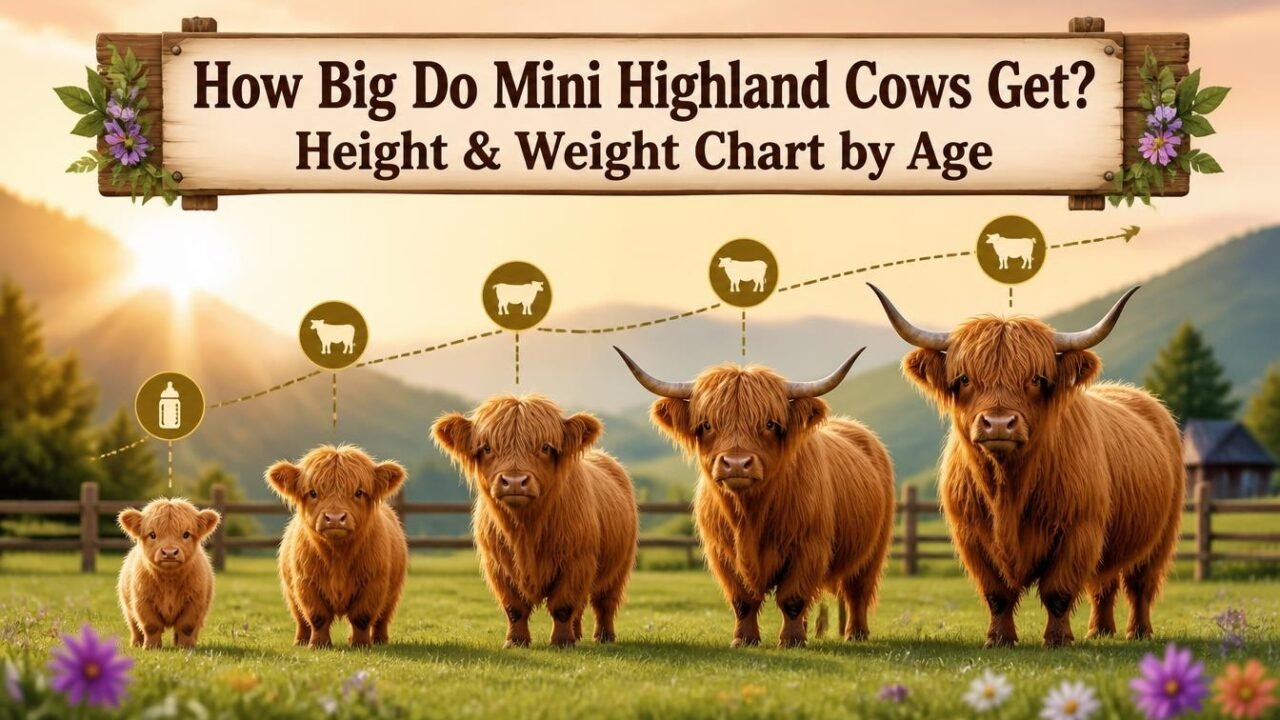
A full-grown mini Highland cow stands between 36 and 42 inches tall at the hip and usually weighs 500 to 700 pounds. Bulls run a bit heavier. Mid-size minis grow to 42–48 inches, and micro minis stay at 36 inches or under. Most mini Highlands reach their adult height around 3 years old and keep filling out until they’re 4 or 5.
That’s the short version. The longer version matters more if you’re about to bring one home.
Hardly a week goes by without someone calling our farm with the same question: “How big is this calf going to get?” It’s a fair thing to ask. You’re planning fencing, a shelter, maybe a trailer, and you want to know whether you’re getting a backyard buddy or a small tank.
We’ve placed more than 500 animals with families across the country, and every one of our mini Highland cattle is born and bottle-raised on our own pasture. That means we watch these calves grow from day one. Below is what we’ve learned about mini Highland cow size: real numbers, how to read them, and what nobody tells you until the calf is already standing in your barn.
Mini Highland Cow Size Categories
“Mini” isn’t one exact size. Miniature cattle are grouped by hip height measured at 3 years of age, and most US breeders follow the categories used by the International Miniature Cattle Breeds Registry (IMCBR):
- Micro mini: 36 inches or under
- Miniature (full mini): over 36 inches, up to 42 inches
- Mid-size mini: 42 to 48 inches
- Standard Highland: over 48 inches
So when a seller says “mini,” ask which category they mean. A 38-inch cow and a 47-inch cow can both be sold as “mini,” but they’re very different animals to live with. The taller one can weigh a couple hundred pounds more and needs noticeably more pasture.
Mini Highland Cow Height & Weight Chart by Age
This is the growth chart we use on our farm. Heights are hip measurements. The weights are typical ranges for miniature heifers. There’s no official published weight standard for mini Highlands the way there is for standard cattle, so treat the weight column as a guide, not a promise.
| Age | Miniature Hip Height | Typical Mini Weight | Mid-Size Hip Height |
| Birth | — | 25–45 lbs | — |
| 6 months | 32.5 in | 175–250 lbs | 42.5 in |
| 9 months | 34.75 in | 225–325 lbs | 44 in |
| 12 months | 37 in | 275–375 lbs | 45.5 in |
| 15 months | 38.75 in | 325–425 lbs | 47 in |
| 18 months | 40 in | 375–475 lbs | Standard size begins |
| 21 months | 40.75 in | 400–525 lbs | — |
| 24 months | Close to 42 in | 425–575 lbs | — |
| 3 years | Under 42 in (final) | 500–700 lbs | 42–48 in (final) |
| 4–5 years | Height stable | Full mature weight | Height stable |
Individual animals vary. Bulls typically weigh 100–200 lbs more than heifers of the same height.
What the Chart Doesn’t Tell You
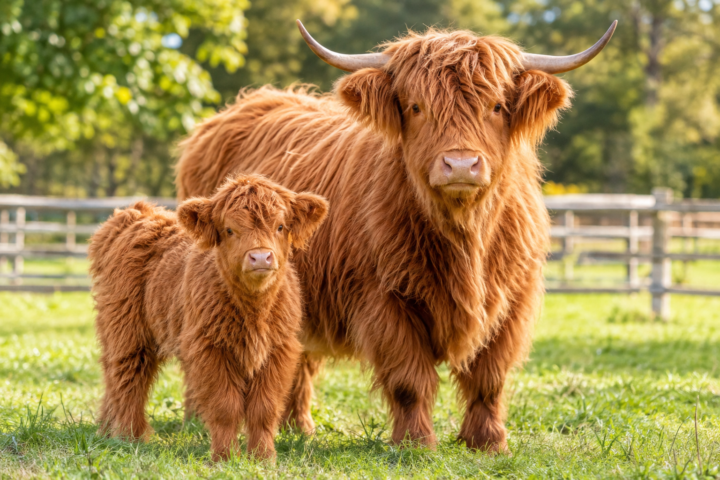
Highlands are slow growers. This catches a lot of people off guard. A mini Highland can be close to her adult height by 2, but she won’t look “finished” until 4 or 5. She keeps adding body, depth, and weight long after she stops getting taller.
That coat adds a lot of “size.” A fluffy winter coat can make a 40-inch heifer look like she’s 48. Hair easily adds a few inches to the eye, which is why you should never judge size by looking. Always measure.
Bulls and steers are bigger. If you compare a bull calf to a heifer of the same age, expect him to be heavier and often a touch taller.
Mini vs Mid-Size vs Standard Highland: Size Comparison
If you’re deciding between a mini and a full-size Highland, this is where the difference really shows.
| Micro Mini | Miniature | Mid-Size | Standard Highland | |
| Hip height (3 yrs) | 36 in or under | 36–42 in | 42–48 in | Over 48 in |
| Cow weight | 400–600 lbs | 500–700 lbs | 600–800 lbs | 900–1,200 lbs |
| Bull weight | Up to ~700 lbs | Up to ~850 lbs | 800–1,000 lbs | Up to 1,800 lbs |
| Land per animal (rough) | ~0.5 acre | 0.5–1 acre | 1–1.5 acres | 1.5–2+ acres |
| Best for | Very small properties | Families, hobby farms | Small homesteads | Ranches, beef |
Standard Highland weights are based on figures from the American Highland Cattle Association and Oklahoma State University. Land needs depend heavily on your grass, rainfall, and whether you feed hay year-round, so it’s worth checking with your local extension office too.
Put simply, a standard Highland cow can weigh nearly twice as much as a miniature. That’s the real reason people choose minis. They eat less, need less space, and are far less intimidating for kids and first-time owners. You still get the same shaggy coat, long eyelashes, and calm personality.
How to Measure a Mini Highland’s Hip Height
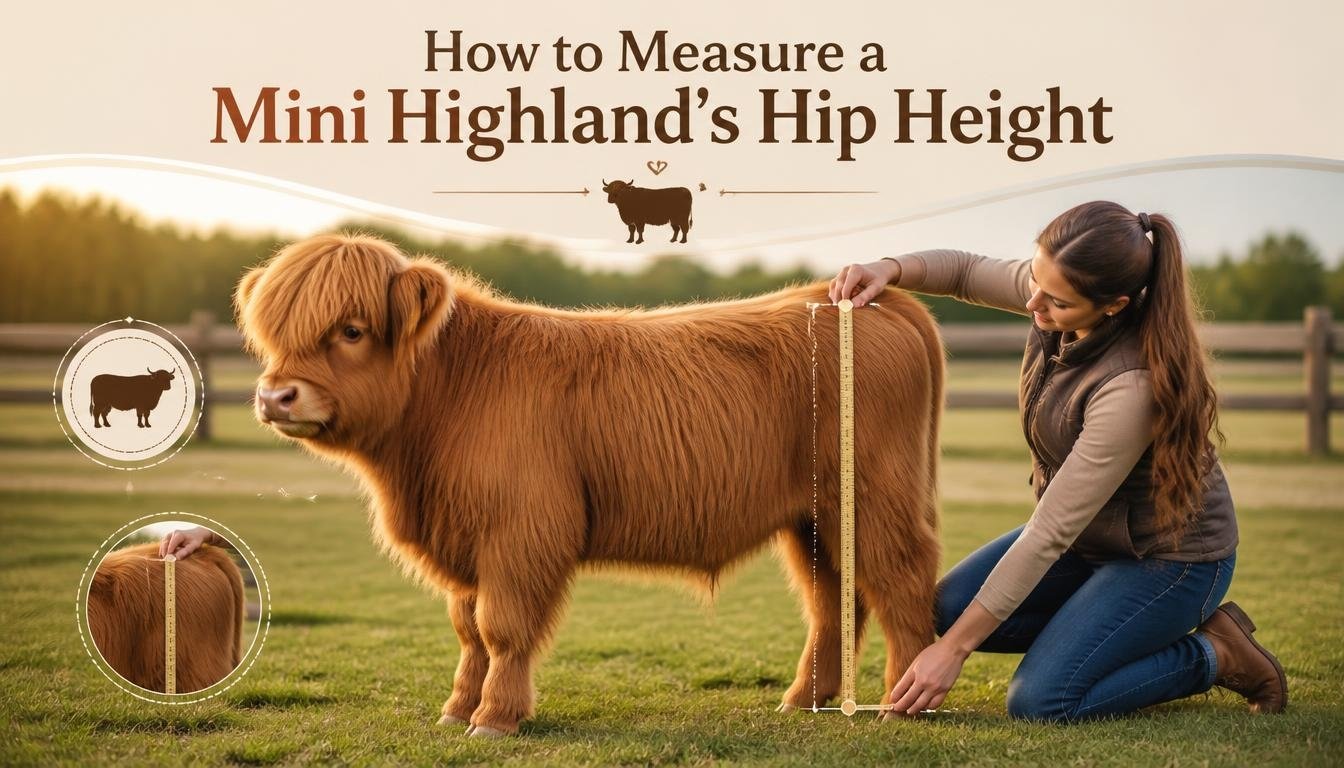
Height decides whether a Highland counts as “mini,” so it’s worth learning to measure it properly. Most sizing disagreements between buyers and sellers come down to someone measuring in the wrong spot.
What you need: a cattle height stick from a farm supply store, or a long level and a tape measure, plus a helper.
- Find flat, level ground. A concrete pad or flat barn floor is perfect. Grass and slopes can throw off your number by an inch or more.
- Get the animal standing square. All four feet should be planted evenly under the body, head in a relaxed, natural position. Not raised high, not dropped to graze.
- Locate the hip. Measure at the top of the rump, right over the hip bones near the base of the tailbone. This is not the shoulder. Some sellers quote shoulder height because it’s lower.
- Part of the hair. Push that thick coat aside so the stick sits on the animal, not on three inches of fluff.
- Measure straight up from the ground. Keep the stick vertical and the crossbar level. Read the number where the bar touches the hip.
- Measure twice. Take it again on a different day. Animals shift their weight, and one reading isn’t always accurate.
Write each measurement down with the date. Checking height every few months is the easiest way to see whether your calf is following the miniature curve in the chart above.
What Affects How Big a Mini Highland Gets?

Genetics
This matters more than anything else. The best predictor of a calf’s adult size is the height of its parents. If both parents measured under 42 inches at 3, the calf has a very good chance of doing the same. Always ask a breeder for the sire’s and dam’s hip heights.
How the Mini Was Bred
Many mini Highlands come from careful, multi-generation selection for smaller frames. Others are crosses, often with Dexter cattle. Crosses can be wonderful animals, but their adult size tends to be less predictable.
Feed and Body Condition
Good nutrition won’t turn a miniature into a mid-size, but poor feeding can stunt growth. Overfeeding adds weight, not height. A healthy mini on decent pasture with quality hay and minerals will simply grow to its genetic potential.
Sex
Bulls end up heavier than heifers. Steers usually land somewhere in between.
A Note on Chondrodysplasia
Some breeders use the dwarfism gene, often called “chondro,” to make cattle shorter. Carrier animals can have health problems, and breeding two carriers together can produce calves that don’t survive. Before you buy from anyone, ask whether their animals have been tested. A good breeder will answer that question openly.
Are “Teacup” Highland Cows Real?
No. You’ll see “teacup” and “pocket” Highland cows advertised online, usually with photos of very young calves. There’s no recognized registry category for a teacup Highland. It’s a marketing word.
Every Highland calf is tiny at a few weeks old. What actually matters is the hip height at 3 years. If someone guarantees that a 2-month-old calf will stay “teacup sized” forever, treat that as a red flag. Honest breeders give you a size range based on the parents, not a guarantee.
How Much Space Does a Full-Grown Mini Highland Need?
A good rule of thumb is half an acre to one acre per miniature, depending on your pasture. Mid-size minis need a little more. If your grass is thin or you live in a dry state, plan to feed more hay and give them extra room.
Two things people often overlook:
- They need a friend. Cattle are herd animals. A lone mini Highland gets stressed and lonely, so plan for at least two.
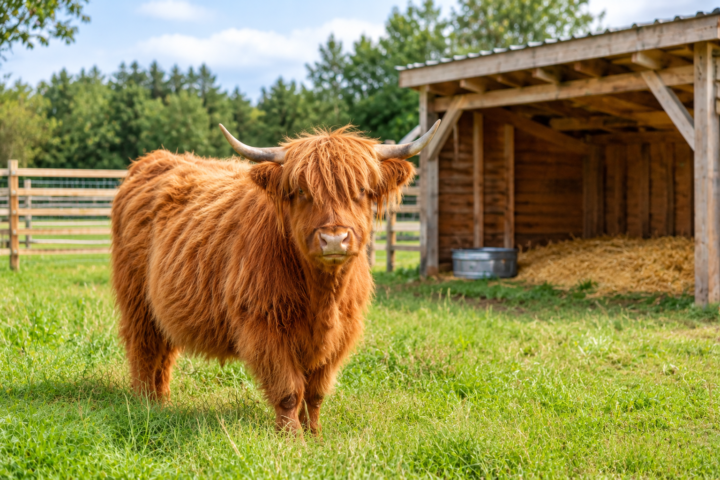
- Shelter, not a fancy barn. Highlands handle cold beautifully thanks to their double coat. What they need is shade in summer and a simple three-sided shelter from wind and rain. Heat is harder on them than snow, so shade and fresh water are a must in southern states.
New to all this? Our How It Works page walks you through getting set up, and we’re always happy to talk fencing and feeding over the phone.
Tips for Buying a Mini Highland That Stays Mini
- Ask for both parents’ hip heights, measured at 3 years or older.
- Ask how the calf was bred: purebred small-frame Highland or a cross.
- Ask about chondro testing.
- Look for registration where it applies, and ask which registry.
- Be wary of guarantees. A good breeder gives you an expected range, not a promise.
Every animal we raise comes with a vet health certificate, up-to-date vaccinations, and our written health guarantee. You can read more about how we raise our herd or see which calves are available right now.
Frequently Asked Questions
How tall is a full-grown mini Highland cow?
A true miniature Highland measures over 36 and up to 42 inches at the hip at 3 years old. Micro minis are 36 inches or under, and mid-size minis are 42 to 48 inches.
How much does a mini Highland cow weigh?
Most miniature Highland cows weigh between 500 and 700 pounds when fully grown. Bulls usually weigh 100 to 200 pounds more, and mid-size minis can reach around 800 pounds.
At what age is a mini Highland cow full grown?
Mini Highlands reach their adult height around 3 years old, but they keep adding weight and body depth until about 4 or 5. Highlands are a slow-maturing breed.
Are teacup Highland cows real?
No. “Teacup” is a marketing term, not a registry category. All Highland calves are small when they’re young. The real size classification is based on hip height at 3 years.
How much land does a mini Highland cow need?
Plan on about half an acre to one acre per miniature Highland, depending on pasture quality and climate. Since cattle are herd animals, you should keep at least two.
Do mini Highland bulls get bigger than cows?
Yes. Bulls are usually heavier and sometimes slightly taller than heifers of the same frame size. A mini bull can outweigh a mini cow by 100 to 200 pounds.
Ready to Meet Your Mini?
Knowing how big mini Highland cows get takes most of the guesswork out of planning. You’ll know how much fence to put up, how much hay to stock, and what to ask a breeder before you buy. If you’d like help choosing a calf that fits your land and your family, request a quote and we’ll get back to you within 24 hours.
1 comment