Key Takeaways
- Most mini Highland cows live 15 to 20 years, and some reach their early 20s. There’s no formal lifespan study for miniatures, so treat that as a well-supported range, not a guarantee.
- “Mini” doesn’t seem to shorten a Highland’s life. The bigger risks are genetics, heat, sudden diet changes and skipped vet care.
- Highlands are hardy, but that doesn’t make them low-maintenance. The breed association’s own guide says survival isn’t the goal.
- Shade and water matter more than most new owners expect, especially in hot, humid states and for older cows.
- Ask any breeder about parent testing for chondrodysplasia, a lethal dwarfism gene found in some miniature lines.
- Plan for a 15 to 20 year commitment: fencing, vet care and a herd mate.
A mini Highland cow’s lifespan is how many years she lives, and the usual answer to “how long do mini Highland cows live?” is 15 to 20. But the number that matters more is how many of those years are healthy ones, because that’s the part you control.
If you’re thinking about bringing one home, the lifespan question is really a commitment question. A calf you buy this year could still be on your pasture in 2041. That changes how you think about fencing, vet costs, and who’s going to look after her if you move. Here’s what we know about how long mini Highland cows live, what moves the number up or down, and how to care for her at every age.
[Hoof Miniatures: add one real example in 2-3 sentences, such as the age of the oldest cow on your farm, how she looked at that age, and one care habit you credit for it.]
How long do mini Highland cows live?
Most mini Highland cows live 15 to 20 years, and some reach their early 20s with good care. There’s no formal lifespan study for miniatures, so that range comes from Highland cattle in general and breeder experience. Genetics, sound feet, steady nutrition and heat management make the biggest difference.
Here’s where that range comes from. The American Highland Cattle Association’s Breeder’s Guide describes hardiness and longevity as the traits the breed developed over centuries in the Scottish Highlands. Drovers’ breed profile says many Highland cows keep breeding past age 18, and Swanston, a Scottish Highland farm, reports a cow that lived to 25.
Those figures describe Highlands in general. We haven’t found a formal study of miniatures, and we’d rather say so than invent a number. In practice, a well-bred mini with good care should follow the same pattern.
What shapes a mini Highland cow’s lifespan?
Five things do most of the shaping: genetics and structure, nutrition, heat, health care and herd life. Here’s how each one helps or hurts.
| Factor | What helps | What shortens a life |
| Genetics and structure | Sound feet and legs, a well-built udder, tested parents | Unpredictable crosses, untested dwarfism carriers bred together, poor feet |
| Nutrition | Good forage fed to body condition, slow diet changes | Sudden grain, overfeeding, thin cows heading into winter |
| Heat | Shade, plenty of water, lighter coat colors | No shade in humid summers, small water tanks |
| Health care | Yearly vet visit, vaccines, parasite control, hoof checks | Skipped care, untreated lameness or pinkeye |
| Herd life | At least one herd mate | Living alone and constantly stressed |
Heat deserves its own paragraph. Penn State Extension notes that in one comparison of closely related cattle, dark-hided animals ran about 2°F hotter in core body temperature, and that very young and very old animals are at higher risk. Temperatures in the mid-90s can raise water needs about 2.5 times compared with 70°F, and the same article suggests roughly three linear inches of tank space per head in hot weather.
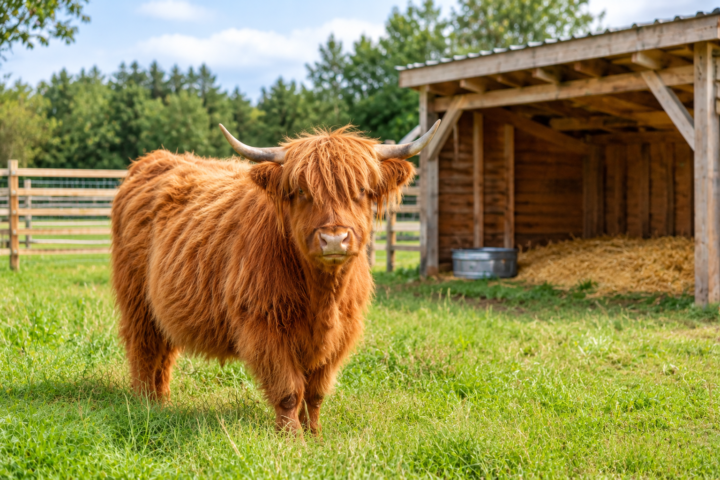
Highlands come in black, red, dun, yellow and white, so a black Highland in Georgia needs more thought than a dun one in Montana.
Does “mini” mean a shorter life?
Nothing we’ve found shows that a smaller frame shortens a Highland’s life. The real risks are genetic: crossbred minis can be less predictable, and some miniature lines carry a dwarfism gene that’s lethal to unborn calves when both parents carry it. Ask for parent testing before you buy.
That gene is chondrodysplasia, often called “chondro” or bulldog dwarfism. The UC Davis Veterinary Genetics Laboratory reports that two carriers bred together have a 25% chance of an affected calf, and affected fetuses are naturally aborted around the seventh month. The lab lists miniature Scottish Highland cattle among the breeds that can be tested. A carrier isn’t affected herself. The risk is in breeding two carriers together.
That’s why you should ask any breeder, including us, whether the parents were tested. For the size side of the story, see our guide on how big mini Highland cows get, which also covers chondro and size categories.
How does care change at each age?
Care changes with age. Calves need colostrum and dry ground, young stock need steady growth, adults need body condition and hoof checks, and seniors need extra shade, softer feed and closer watching. Highlands keep filling out until about age four or five, so don’t treat a three-year-old as fully grown.
The ages below are rough guides, not rules. Your vet should confirm what suits your animals.
| Stage | Rough age | What to focus on |
| Calf | Birth to 6 months | Colostrum within the first hours, dry ground, a vet-set vaccine and deworming plan, watching for scours |
| Young stock | 6 to 24 months | Steady growth on good forage, halter training, hoof checks, no grain overload |
| Young adult | 2 to 5 years | Still maturing. First-calf heifers are at higher risk of calving trouble, according to the Breeder’s Guide |
| Prime | 5 to 12 years | Hold body condition steady, yearly vet visit, hoof care, parasite control |
| Senior | About 12 years and up | More shade and water, softer feed if teeth wear, closer watch on weight and hooves |
What daily care helps a mini Highland live longer?
Six habits do most of the work: good forage fed to body condition, shade and plenty of water, regular hoof checks, a vet-built vaccine and parasite plan, a herd mate, and a close eye on weight and teeth as she ages. None of it is complicated, but all of it has to be consistent.
- Feed forage first, and feed to condition. Good pasture and hay carry most of the load. Highlands turn rough forage into condition very well, which is also why they get overweight so easily. The Breeder’s Guide is blunt about the other side: it calls it a misconception that hardy cattle shouldn’t be fed, and says mere survival isn’t the goal. Make any change in feed slowly. The guide warns that a sudden surge of fermentable feed, such as grain, can make a cow very sick.
- Give her shade and more water than you think. Plan the shade and tank space before the first hot week, not during it. Control flies too, because they add stress on top of heat.
- Check hooves regularly. The Breeder’s Guide treats sound feet as the base of a long productive life. Look for overgrown or cracked hooves, uneven claws and any limping, and call a hoof trimmer or your vet early.
- Build a herd-health plan with a large-animal vet. Vaccines and parasite control vary by region, so don’t copy another farm’s schedule. The guide lists fly strike and pinkeye among the problems worth planning for.
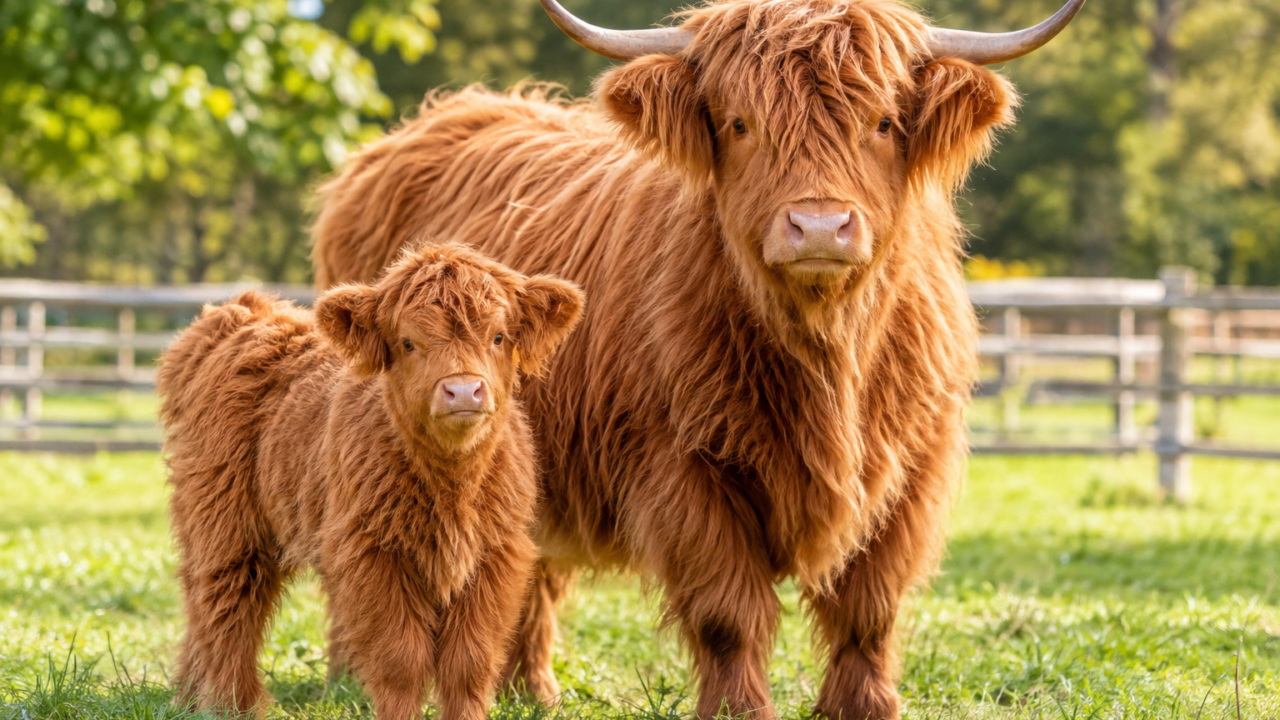
- Keep her with a friend. Cattle are herd animals, and a lone mini Highland tends to get stressed and lonely. Plan for at least two.
- Watch weight, teeth and coat as she ages. Fluffy hair hides condition, so feel her ribs and hips monthly instead of trusting your eyes. Your county extension office can show you how to score body condition scores.
New to all of this? Our How It Works page walks you through getting set up, and we’re a call away for fencing and feeding questions.
When should you call a vet?
Call a vet the same day if she’s breathing with her mouth open, drooling heavily, stops chewing cud, has a swollen left side, is lame, or has a calf with scours. Waiting a day on a cow this size can turn a fixable problem into an emergency.
Other signs that deserve a call: sudden weight loss, a runny or cloudy eye, a cow that stays away from the herd, or any calf that hasn’t nursed. This is general guidance, not a diagnosis. Your vet knows your region and your herd.
Five common mistakes and myths
Do hardy Highlands really not need much care?
Hardy means she tolerates weather. It doesn’t mean she can skip feed, minerals or a vet. The breed association’s own guide makes that point directly.
Does a smaller cow live a shorter life?
Not that we can find. Genetics, care and heat matter far more than frame size.
Is a round, fluffy cow a healthy cow?
Not necessarily. A thick coat hides condition, so a cow can look solid and be thin, or look fluffy and be overweight. Feel her ribs and hips, and don’t trust your eyes.
Does a shaggy coat mean heat doesn’t bother her?
The coat helps in winter and she sheds it in spring. In hot, humid states it can work against her. Shade and water aren’t optional.
Does it matter who you buy from?
Yes. Parent testing, an honest size range and a written health guarantee tell you what you’re actually buying. Ask for all three in writing.
The good and hard parts of a long life
| The good part | The hard part | |
| Companionship | Years with the same calm animals | Decades of daily chores |
| Cost | Costs spread across many years | Fencing, hay, vet and hoof care keep adding up. See what a mini Highland costs |
| Planning | Easy to get attached | You need a plan if you move, change jobs or age out of chores |
| Senior years | Many cows stay healthy well into their teens | Late-life care takes more time and watching |
When a mini Highland isn’t the right animal
A mini Highland is a poor fit if you can’t commit 15 years or more, if you live somewhere hot and humid and can’t give her shade, or if you only have room for one animal and no plan for a companion. If your main goal is beef, a standard-size Highland or another breed will usually make more sense.
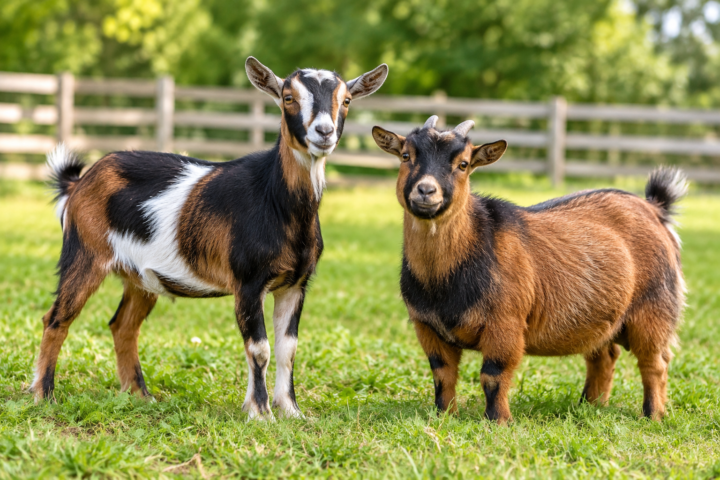
If you want something lighter, a pair of mini goats is an easier first step, and we raise those too. We’d rather you wait than rush into a 15-year decision. If you’re ready, browse our mini Highland cattle.
Lifespan at a glance
| Item | Detail |
| Typical mini Highland lifespan | 15 to 20 years (breeder experience and breed profiles; no formal study of miniatures) |
| Highland cows still breeding late | Many continue past age 18 (Drovers breed profile) |
| Longest Highland lifespan we found reported | 25 years (Swanston, a Scottish Highland farm) |
| When a mini Highland is fully grown | Height around age 3, body fills out to age 4 or 5 (Hoof Miniatures size guide) |
| Water need in mid-90s°F heat | About 2.5 times the need at 70°F (Penn State Extension) |
| Tank space in hot weather | About 3 linear inches per head (Penn State Extension) |
| Chance of an affected calf, carrier to carrier | 25% (UC Davis Veterinary Genetics Laboratory) |
FAQs
Do mini Highland cows live as long as full-size Highlands?
Almost certainly, yes. Nothing we’ve found shows that miniature Highlands live shorter lives than full-size ones. Both commonly reach their late teens, and many go beyond. The exceptions are genetic problems, such as dwarfism carriers bred together, and poor care. Ask your breeder about parent testing and herd health.
What do mini Highland cows eat to stay healthy?
Mostly grass and good hay, plus a mineral supplement your vet recommends for your region. Grain is optional and should be limited, because a sudden surge of grain can seriously upset a cow’s rumen. Highlands are hardy, but hardy doesn’t mean they can live on scraps. Feed to body condition, not to appetite.
What shortens a mini Highland cow’s life?
Most early losses trace back to a short list: lethal genetics when two carriers are bred, calving trouble in young heifers, heat stress without shade or water, sudden grain overload, and untreated illness or lameness. Almost all of these are preventable with parent testing, shade, steady feeding and a vet you trust.
Can a mini Highland cow live alone?
She can, but she shouldn’t. Cattle are herd animals, and a lone mini Highland tends to get stressed and lonely. Plan for at least two. A second animal of any age helps, and a steer or another heifer works well if you don’t plan to breed.
How often does a mini Highland need a vet?
Plan on at least one yearly herd-health visit, plus a call whenever something looks off. Your vet will set vaccines and parasite control for your region, check teeth and feet, and judge body condition. Ask about this before the animal arrives, so you already have a large-animal vet’s number.
When is a mini Highland cow considered old?
There’s no official age. Many owners start adjusting care around 12 to 14 years: more shade, softer feed, closer watching of weight, teeth and hooves. Individual cows vary a lot, so go by condition rather than the calendar.