Why the Nubian Goat Produces the Richest Cheese Milk Ever
At our farm, the Nubian goat is one of our most requested dairy breeds. It’s easy to understand why. Long floppy ears, a distinctive Roman nose, and rich milk make this breed stand out. That milk is also great for making real cheese. The breed started in England with goats brought over from Africa and Asia. Over time, it became one of the most popular dairy goats in the country.
This guide covers where the breed comes from, how big it gets, its coloring, its milk, temperament, cost, and daily care. We’ll also cover something that many basic guides leave out. From our experience, it’s something you should know before bringing one home.
By the end, you’ll have a clear idea of what you’re signing up for. That includes the one trait that can catch new owners off guard. In some cases, people only realize how important it is after they’ve already brought the animal home.
Where the Breed Actually Comes From
The Nubian goat is a large dairy breed with long, floppy ears and a curved Roman nose. Its body is also more substantial than many other dairy breeds. In fact, its build can look more like a dairy cow than a typical goat. Some registries call it the Anglo-Nubian, which reflects its British roots. However, most American breeders simply call it a Nubian.
Unlike breeds developed mainly for milk volume, this one was bred for two purposes from the beginning: milk and meat. That’s why it has a bigger, fleshier frame than slimmer dairy breeds such as the Saanen or Alpine. We also find that this background helps explain why the breed can adjust well to different climates and farm setups.
A Brief History
The breed traces back to English goats crossed with imported stock from India, Egypt, and Africa. This took place during the 19th century. Breeders combined those bloodlines with the Old English Milch Goat. English breeders then worked to refine the type. Eventually, the breed reached the United States, where it became recognized as its own distinct dairy breed.
Today, the American Dairy Goat Association keeps a formal herd book for the breed. It also remains one of the most widely registered dairy goats in the country.
How Big Does a Nubian Goat Get
Size can vary more in this breed than you might expect. Why does that happen? Breeders often have different goals when selecting animals. Some prefer a bigger, meatier frame, while others want a leaner dairy build. We’ve seen noticeable differences between breeding lines ourselves. So, don’t expect every animal to have exactly the same body type.
Adult Size Range
Height is measured at the withers once an animal is fully grown. That point is usually reached at around two years of age.
Does stand at least 30 inches tall at the withers. Most weigh between 135 and 175 pounds.
Bucks are larger, usually standing 32 inches or more. Their weight commonly falls between 170 and 200 pounds or more. Some lines grow even larger. Depending on the breeding goals, bucks can pass 250 pounds.
Growth happens fairly quickly in this breed compared with smaller dairy goats. Most animals get close to their mature size well before some other goats of the same age.
From Kid to Full Grown
Kids grow quickly from the time they are born. Most does are ready to breed at around 8 months old, or once they reach roughly 80 pounds. Still, breeding age does not mean the animal has reached full maturity. The body continues to develop, and peak milk potential usually does not appear until closer to the second birthday.
Recognizing the Coat and Signature Features
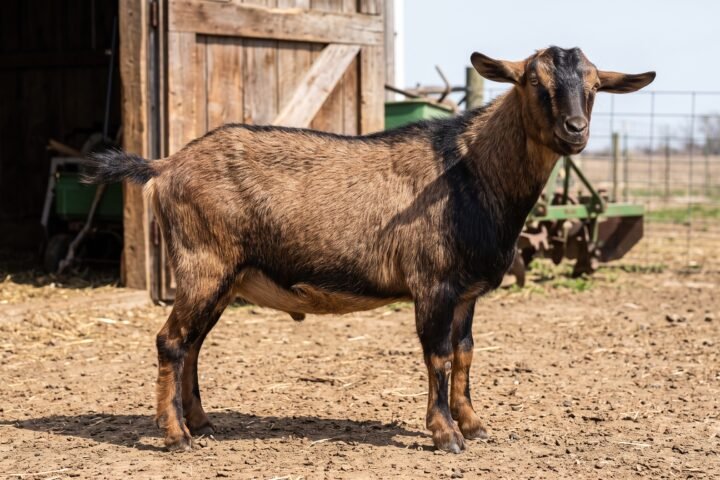
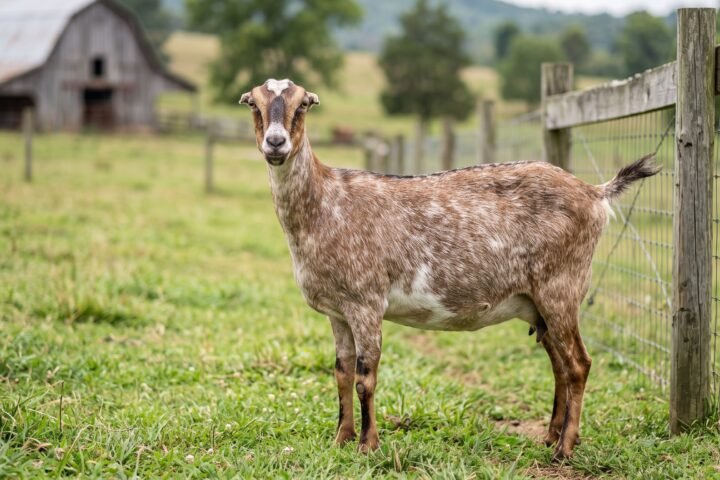
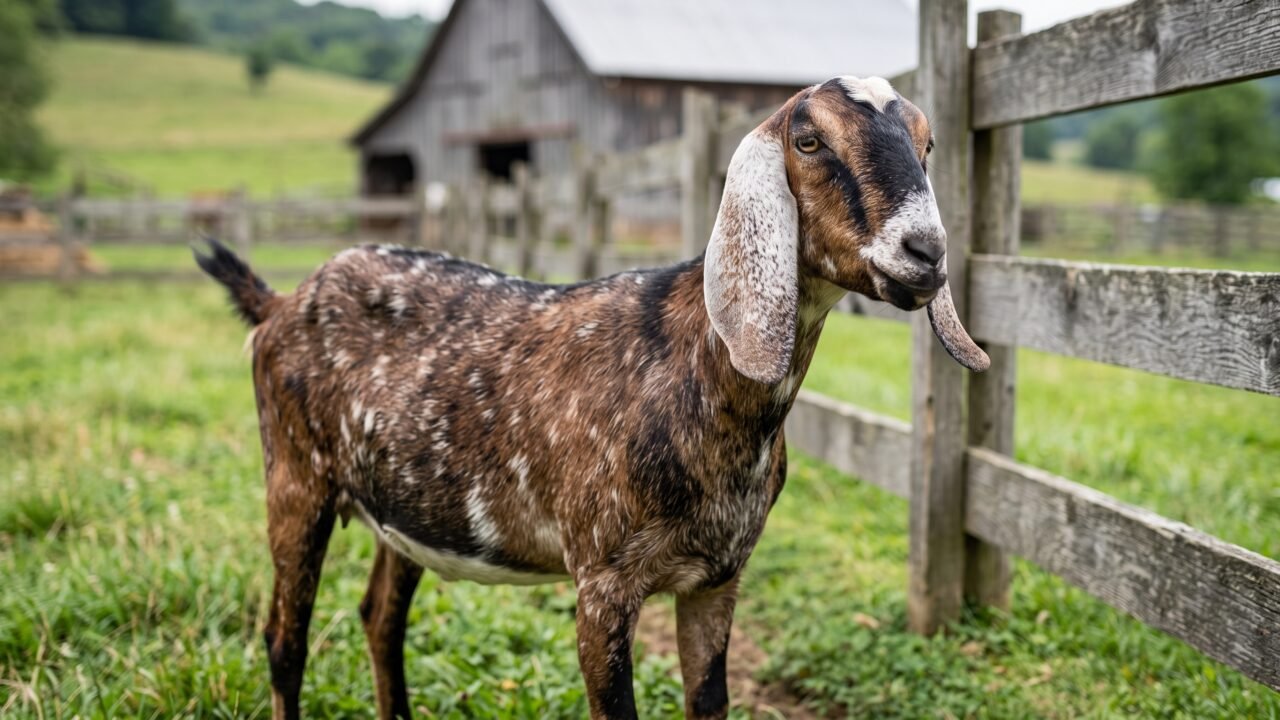
Coloring in this breed is famously varied. Almost any color or pattern can be accepted under breed standards. That’s unusual for a dairy breed where body shape and structure receive so much attention. This gives breeders more freedom to focus on production and other useful traits. Color restrictions do not narrow the gene pool here in the same way they can with some other dairy breeds.
Common Coat Patterns
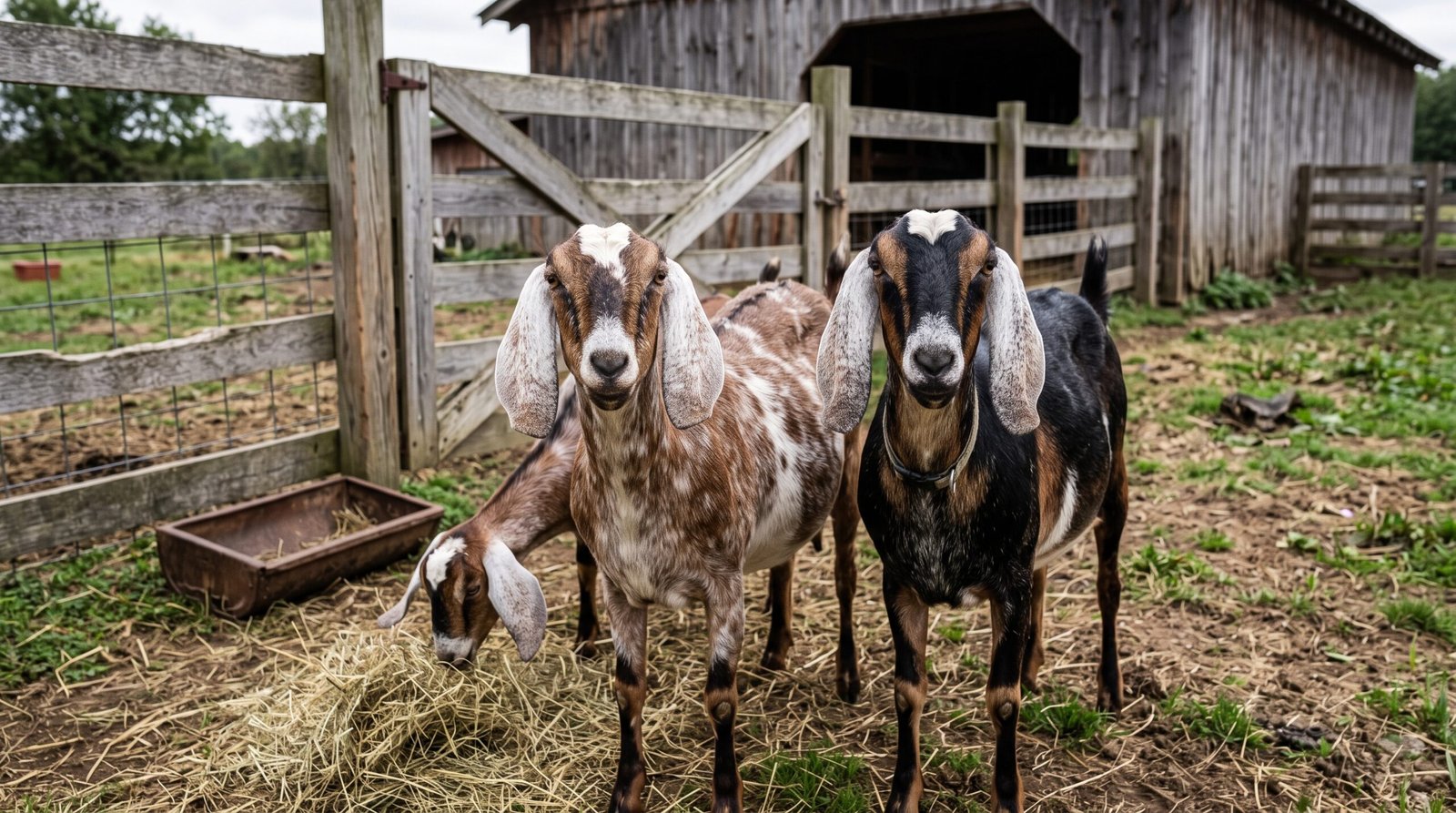
Common colors include black, chestnut, cream, red, tan, and white. They often appear in combinations rather than as one solid color. The coat stays short and glossy throughout the year. That also keeps grooming fairly simple compared with longer-coated breeds.
The ears are easily the signature feature of this breed. They’re long, wide, and droopy, hanging at least an inch below the muzzle under most standards. Add the distinctly curved Roman nose, and you get a profile that’s difficult to confuse with most other dairy goats.
What Makes the Milk Worth Talking About
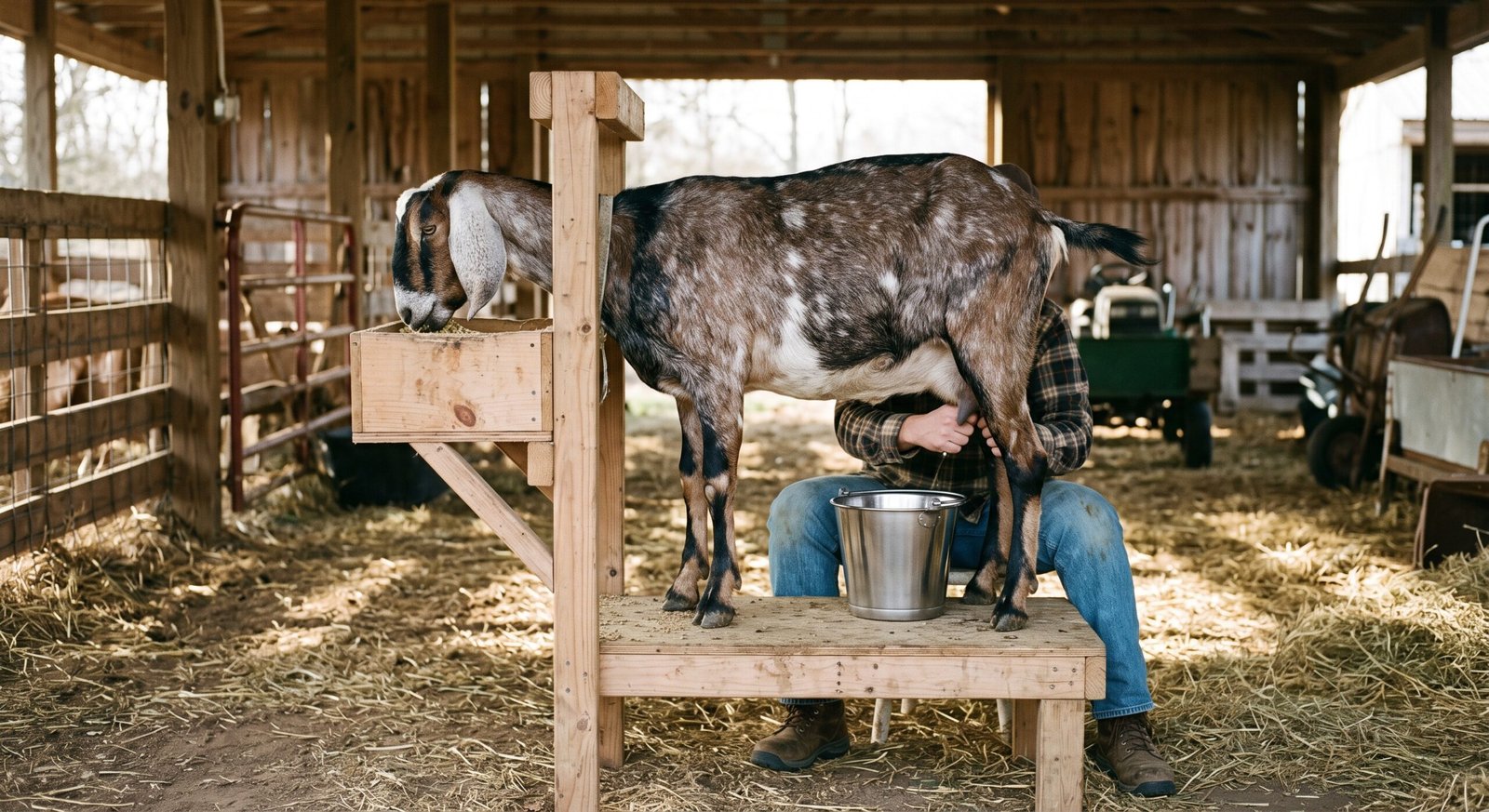
This is where the Nubian goat really earns its reputation. Some people call it the “Jersey of the goat world” because of its rich, high-butterfat milk. That richness matters more than sheer volume for many owners. It’s one reason cheese makers and soap makers often look for this breed instead of choosing a higher-volume dairy animal.
Typical Milk Yield
A healthy doe usually produces 4 to 5 quarts of milk a day. That’s during a 9 to 10 month lactation. Actual output can change based on diet, genetics, and where she is in her lactation cycle. We’ve seen those differences on the farm, so it’s better to treat these figures as a useful range rather than a guarantee.
Milk Quality and Butterfat
Milk from this breed typically contains around 4.5 to 5 percent butterfat, and some animals can produce even more. That makes it especially useful for cheese, yogurt, butter, and soap. Many owners choose this breed specifically because of that richness. It can also produce noticeably better cheese yields per gallon than leaner dairy breeds.
The Noise Factor Nobody Fully Warns You About
Here’s the gap most guides skip. We don’t think buyers should skip it. This breed is loud. Not just occasionally vocal, but genuinely loud. On our farm, we’ve learned that this can be one of the biggest surprises for someone who has never owned one before. It’s also one of the reasons some new owners end up rehoming an otherwise healthy, well-cared-for animal within the first year.
Why Nubians Are So Vocal
Nubians talk. A lot. Their call has a distinctive, almost human-sounding bleat. Compared with many other dairy breeds, they can be louder and more frequent. They’ll vocalize when they’re hungry, want attention, or are in heat. Even a change in their normal routine can set them off. And when they start calling, the sound can carry a long way. That may be perfectly fine on a larger farm, but close neighbors may feel differently.
What This Actually Means Before You Buy
If you’re on a smaller property, live in a suburban area, or have close neighbors or an HOA, take this seriously. Don’t treat it as a small detail after the animal is already home. A few simple things can help. Keeping goats well-fed and following a consistent routine can reduce a lot of demand-related calling. We also recommend checking local noise ordinances before buying. That small step can save you an awkward conversation with a neighbor later.
Personality Traits You’ll Live With Daily
Outside the noise, this breed has a well-earned reputation for being affectionate, smart, and people-oriented. This Nubian goat isn’t just a milking animal. Once it settles in, it can become part of the family. That’s a big reason the breed remains popular with families and small farms.
However, that intelligence can work both ways. A smart goat learns bad habits just as quickly as good ones. Consistency matters from day one. We’ve learned that through our own farm experience more than once.
A Friendly, Attention-Seeking Breed
Handle them regularly from a young age. With enough positive interaction, you’ll often get an animal that becomes closely bonded with its owner. Ours have followed us around the property much like dogs. That same intelligence also makes them fast learners. It can be useful, but it means they’re equally quick to find weak spots in fencing or gate latches.
Social Behavior and Herd Needs
Goats are strongly herd-oriented animals. Never keep one as a solitary pet. A goat left alone can become noticeably stressed. With this breed, isolation can also make the animal even louder. Plan on getting at least two from the start. Having another goat around gives them the companionship they naturally need.
Setting Up Space, Feed, and Routine Care
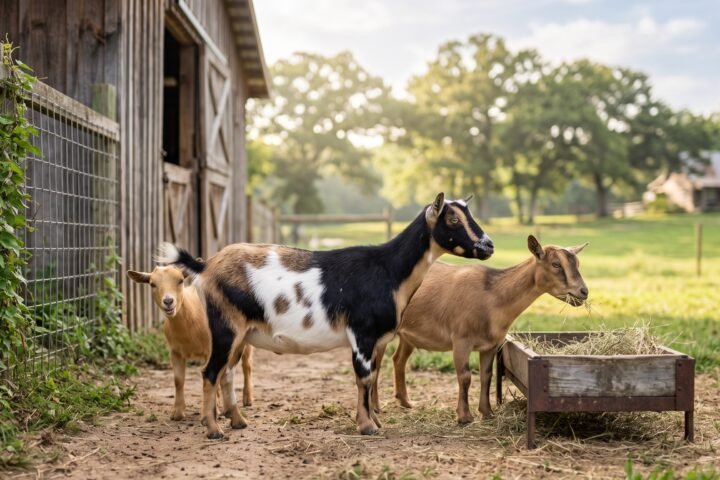
Because of their larger size, these goats need more space and feed than many smaller breeds. That matters if you’re comparing them with something like a Nigerian Dwarf or Pygmy. Budget for the extra space and feed before you buy. We’ve found that planning this early saves a lot of scrambling later, especially when you’re changing a setup that was originally made for smaller goats.
Space Requirements
Plan on at least 200 to 250 square feet of secure paddock space per animal. Add shade, windbreaks, and something safe for them to climb on. Fencing needs to run at least 4 to 5 feet high, using woven wire or cattle panels. These goats are strong, clever, and persistent when they find a weak point. We’ve had enough experience with goats testing fences to know that cutting corners here isn’t worth it.
Feeding Requirements
Diet needs scale up with this breed’s larger size compared with miniature dairy goats.
- Quality pasture and browse should make up most of the diet. Nubians often prefer brush and weeds over plain grass.
- Milking does need supplemental grain to support their higher production.
- A goat-specific mineral supplement helps fill nutritional gaps that forage alone may not cover.
- Fresh water needs to stay available at all times, especially for lactating does.
Routine Health Care
Preventive care stays important no matter which breed you keep. Annual checkups, core vaccinations, deworming, and hoof trimming every six to eight weeks can help keep most Nubians healthy well into their later years. Shelter matters more with this breed than with some hardier meat-type goats. They are less cold-tolerant, so they need dry, well-ventilated, draft-free housing.
What Owners Can Expect Long Term
This breed is generally considered long-lived for a dairy goat. That can add real value to the overall cost of ownership. A longer lifespan also means more potential years of milk from one doe. When we look at the cost of a well-bred animal, that longer productive period is worth considering.
How Long They Typically Live
With good care, Nubians commonly live 15 to 18 years. Some may live even longer with strong nutrition and consistent veterinary care. Diet, genetics, routine hoof care, and parasite management all play a role in how things turn out for each individual animal.
Breaking Down What You’ll Actually Pay
Cost can vary quite a bit with this breed. A lot depends on the animal’s breeding line, registration, and production history. A kid with no production record will naturally have a different price from a doe with two or three documented lactations already behind her. When comparing prices, we always recommend looking at what you’re actually getting for the money.
Typical Price Range
An unregistered kid or wether commonly costs between $150 and $300. A registered doe from a proven milking line usually runs higher, often around $300 to $700. Exceptional show-quality or high-production animals can sometimes exceed that range.
Key Cost Factors
- Registration status and documented parentage through the American Dairy Goat Association can affect price significantly.
- Milk production history matters a great deal for does, since proven milkers often command a real premium.
- Coloring and conformation compared with breed standards can also play a role.
- Local demand and the breeder’s reputation in your area can influence the final price too.
Finding a Reputable Breeder
Because this breed is so widely kept, finding a listing is rarely the hardest part. Finding a healthy, well-bred animal with good documentation takes more effort. We recommend spending extra time checking the breeder before you buy. It can save real money and heartache later, especially with an animal that may be part of your farm for many years.
Questions Worth Asking a Breeder
A few direct questions can tell you much more than photos ever will.
- Ask for documented height and weight of both parent animals.
- Request registration papers if the animal is advertised as purebred.
- Ask about milk production history if you’re buying a doe for dairy purposes.
- Ask how vocal the individual animal tends to be. This can genuinely vary from goat to goat.
- Visit in person whenever it’s realistically possible before committing.
Things to Watch Out For
Watch out for unusually low prices. Also be careful with sellers who won’t share parent measurements or milk records. The same goes for listings with no verifiable history. A breeder who is open about the animal’s background should generally be willing to answer these basic questions. From our experience, that openness is a good sign when you’re deciding who to buy from.
Frequently Asked Questions
How much does it cost?
Unregistered kids or wethers typically run $150 to $300. Registered does from proven milking lines often cost $300 to $700 or more.
How big does it get?
Does typically stand at least 30 inches at the withers and weigh 135 to 175 pounds. Bucks run larger, often weighing 170 to 200 pounds or more.
How much milk does it produce?
A healthy doe commonly produces 4 to 5 quarts per day during a 9 to 10 month lactation. The milk also runs notably high in butterfat.
Are they loud?
Yes. This is one of the more vocal dairy goat breeds. Take that seriously if you have close neighbors or live under noise restrictions.
What is the average lifespan?
With proper care, this breed commonly lives 15 to 18 years. Some may live longer with strong nutrition and consistent veterinary care.
Do they need a companion?
Yes, always. A single goat left alone can become stressed. With this breed in particular, it may also become considerably noisier about it.
Conclusion
The Nubian goat brings serious dairy value, an unmistakable appearance, and a genuinely affectionate personality. It’s easy to see why it remains so popular on small farms. Between the rich, high-butterfat milk and the long lifespan, this can be a rewarding animal for the right owner. Just make sure you’ve honestly considered the noise factor before bringing one home.
If you’re looking for a healthy, well-documented animal for your own property, we work directly with verified breeders. We can help you find the right animal for your setup. Reach out, and we’ll walk you through your options from start to finish.